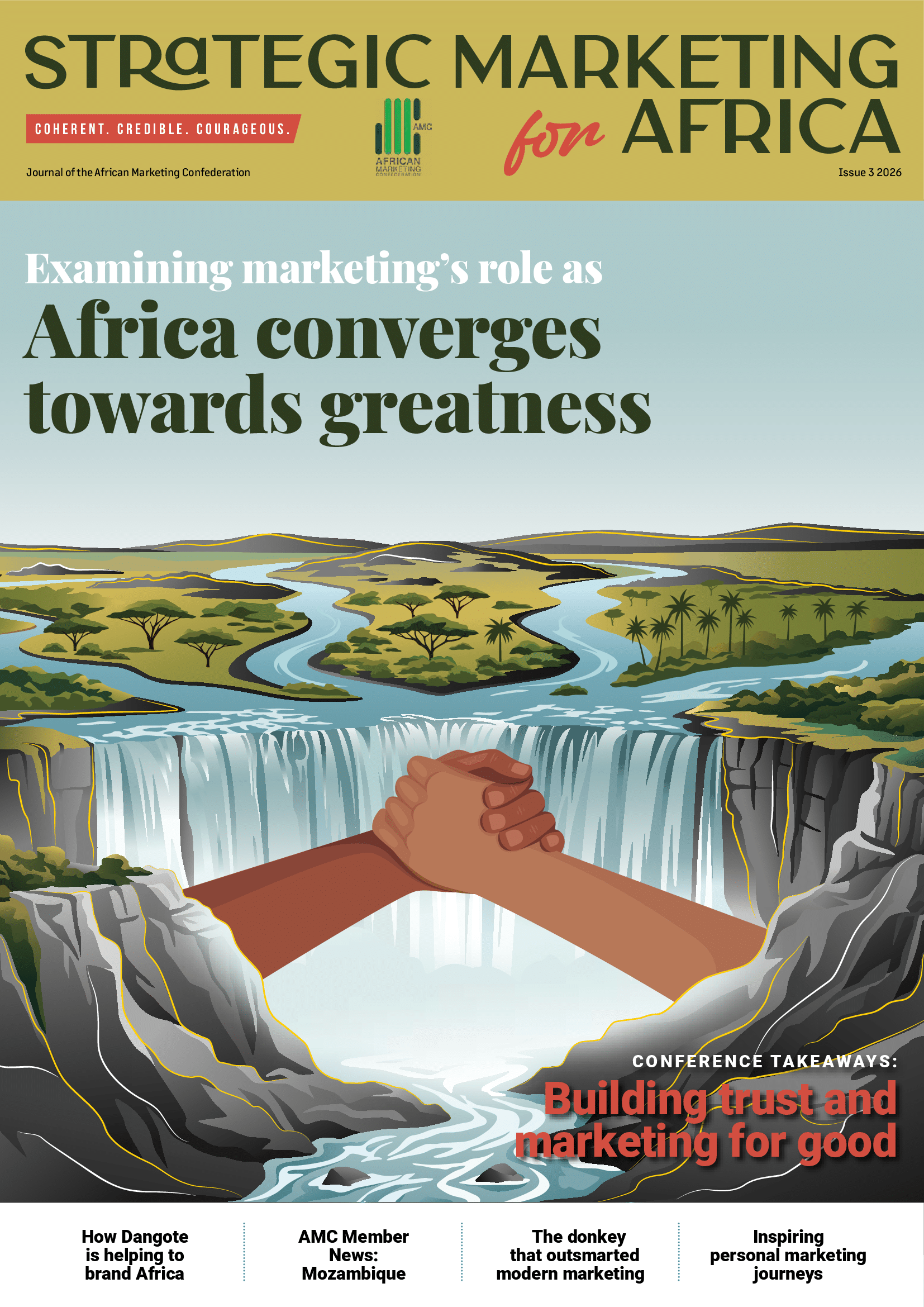
African marketing shows up in Livingstone with a new confidence and determination
Over three incredible days, leaders, innovators and professionals came together in Zambia to exchange ideas, build connections and take African marketing forward.
We highlight the key discussion points of the 2026 African Marketing Confederation conference and their potential short-term and long-term impact on the marketing profession in Africa, as well as on the economic growth of the continent and the evolution of Africa as a brand.
For the first time, the AMC conference was also part of the Africa Commerce Convergence Summit (ACCS). Delivering the ACCS keynote address, Professor Edward Kieswetter focused on the theme ‘Africa’s Economic Reset: Mobilising Capital, Revenue and Trade for Industrialisation’.
In a frank presentation that recognised the many challenges that still exist along the road to a more united and businesslike Africa, Kieswetter noted that despite the establishment of the African Continental Free Trade Area (AfCFTA), intra-African trade remains low, at an estimated 15-18% of total trade. By comparison, intra-regional trade approaches 60% in Europe and Asia. Africa, he emphasised, still finds it easier to trade with the rest of the world than with itself.
How Dangote turned CNN into Africa’s biggest brand campaign
In August 2026, Africa’s largest industrial conglomerate, Dangote, signed a multiyear deal with one of the world’s biggest news networks, CNN. Not to sell cement. To sell a narrative: Africa isn’t emerging anymore. It’s arrived.
We examine the multiyear partnership between the broadcaster and Africa’s most admired brand, and what it teaches every marketer and business that is dominant at home but invisible abroad.
How traditional trade is being reimagined, but remains ‘traditional’
There is tendency to hype the inroads modern retail is making into Africa. While it is certainly increasing in importance, the traditional trade is still outstripping modern trade in growth terms. This vast network of independent stores, street vendors, market traders, informal settlement stores and rural shopkeepers hold sway across much of the continent.
A recent webinar on the future of the traditional trade in Africa noted that countries like Nigeria are among a limited number that flip this trend on its head as modern retail growth outstrips traditional trade.
Egypt is another exception. By and large, however, traditional trade’s combination of proximity, cost and a hands-on experience keeps most African consumers coming back for more.
You will find these stories, and many more, in Strategic Marketing for Africa – the voice of African marketing and the official publication of the African Marketing Confederation (AMC). Read or download Issue 3 2026 online here. The Print Edition will be available shortly.