We know AI influencers aren’t real – so why do we trust them?
Researchers describe AI influencers as having a ‘dual identity’. Consumers evaluate both ‘person’ and ‘technology’ identities at once.
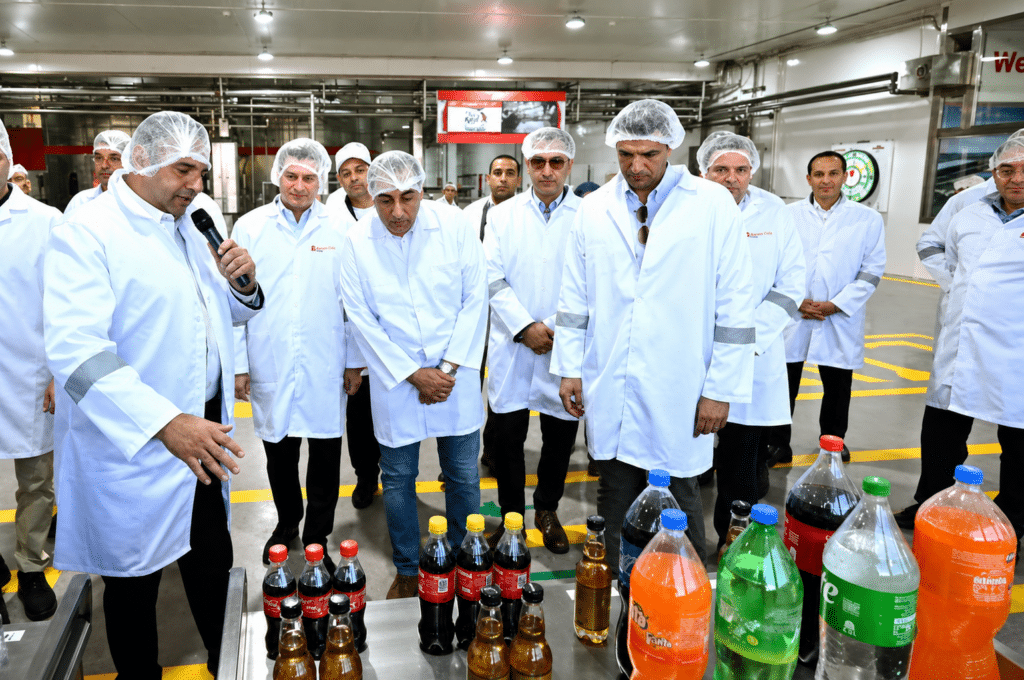
Coca-Cola Hellenic Bottling Company (HBC) plans to invest US$1.28 billion in Egypt between 2026 and 2030. The investment plan was announced during the inauguration of a new production line at the company’s Alexandria plant. The five-year programme is part of Coca-Cola HBC’s strategy to expand production capacity and strengthen its position in one of its key African markets.
Coca-Cola HBC has operated in Egypt since 1994 and currently runs five bottling plants in Alexandria, Tanta, Sadat City, Qalyub and Assiut. The company is among Egypt’s leading beverage manufacturers and distributors, producing and marketing brands such as Coca-Cola, Sprite, Fanta and Schweppes.
According to Coca-Cola Hellenic Egypt, the local subsidiary of Coca-Cola HBC, the company’s operations generated nearly $1-billion in economic value for Egypt in 2024. The company said it directly employed around 4,900 people and supported approximately 64,000 jobs through its supply chain and distribution network.
Coca-Cola expands investments across Africa’s largest markets
Beyond Egypt, the Coca-Cola system is increasing investments in some of Africa’s largest economies, notably Nigeria and South Africa. In South Africa, The Coca-Cola Company announced in March an investment programme equivalent to about $1.06-billion, for the 2026-2030 period. The initiative aims to expand production capacity, improve distribution networks and support innovation across the company’s operations in the country.
The announcement followed a similar investment program unveiled for Nigeria in 2024, also valued at $1-billion over five years. These investments come amid a broader reorganisation of Coca-Cola’s bottling operations across Africa. Since 2025, Coca-Cola HBC has been pursuing the acquisition of Coca-Cola Beverages Africa (CCBA), the group’s main bottling partner on the continent. CCBA operates in around 15 markets, including South Africa.
Stéphanas Assocle, Ecofin Agency

Researchers describe AI influencers as having a ‘dual identity’. Consumers evaluate both ‘person’ and ‘technology’ identities at once.

Reputation and trust, once modest influences on hotel choice, have become some of the strongest predictors of patronage, study finds.

South African brands are increasingly setting the global benchmark for customer loyalty strategies, organisers say.

Global influences among younger consumers are still present, but they are being filtered through a distinctly Zambian lens.

Researchers find that lack of perceived ‘genuine care’ is the mechanism connecting AI involvement to lower trust ratings.

Explore the 2026 AMC Conference speaker line-up. Top African marketing voices gather in Zambia to tackle AI, AfCFTA, and brand power. Register today.