South Africa’s automotive market has entered a new phase of recovery, following its strongest performance in nearly two decades in 2025.
Against this backdrop, Africa-focused marketing agency Rogerwilco has released its 2026 South African Automotive Report, developed in collaboration with martech company Youknow Technologies
The report reveals a shift in how car buyers evaluate brands and make decisions. Consumer choices are increasingly being shaped earlier in the journey, often before any direct interaction with a dealership or brand. Search behaviour, social conversation and peer validation are no longer just awareness drivers, they are actively determining which brands make it into consideration.
“The battle in South Africa’s automotive market is no longer just for market share, it’s for mental availability at the moment of decision,” says Mongezi Mtati, Senior Brand Strategist at Rogerwilco.
“With 92% of car buyers completing their research online before visiting a dealership, search behaviour, social conversation and sales data can no longer be seen in isolation. They are part of the same system and the brands that understand how they move together will always be a step ahead.”
According to the researchers, one of the most significant findings is the growing concentration of influence in online conversations. While overall brand mentions grew by 10% in 2025, the number of contributors driving those conversations fell by 11%. This is not a sign of disengagement but consolidation. In a price-sensitive market, buyers are more deliberate and the voices that carry weight are fewer and more influential.
Asian challenger brands are gaining ground
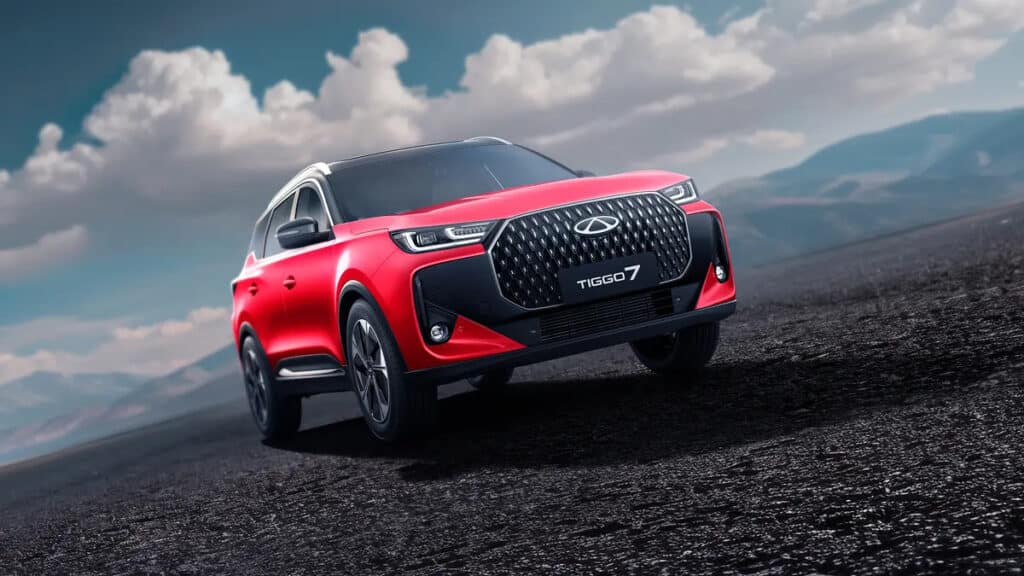
At the same time, challenger brands, particularly from Asia, are gaining ground – driven by strong digital visibility, competitive pricing and positive sentiment. The Chinese-based Chery brand saw the most dramatic shift, with a 510% increase in social mentions, rising nine places to become the most-mentioned passenger car brand in South Africa, overtaking BMW, which declined by 13%.
This surge reflects a combination of factors: strong product performance from the Tiggo 4 Pro, a high-impact collaboration with media personality Ashley Ogle and growing reports of a potential local assembly plant.
“For consumers, localisation signals permanence, investment and long-term commitment,” the researchers emphasise.
Chery was not alone. GWM and Mahindra – brands from China and India respectively – saw sales jump more than 40% in 2025, while Chinese brand Jetour, barely on the radar twelve months ago, is already posting record monthly sales figures in early 2026 and breaking into the top 10.
Heritage brands, meanwhile, continue to hold strong. Toyota extended its market leadership for a 46th consecutive year while Suzuki overtook Volkswagen for second place, supported by consistent search visibility, product-market fit and its community partnership with prominent soccer club Orlando Pirates.
“The data does not point to a decline of legacy brands but to a more competitive market where digital presence is as important as brand history,” the report states.
The full 2026 South African Automotive Report is available for download here.