SUPPLY CHAIN

Lagos modernising agricultural value chain and tackling food insecurity

By our African Marketing Confederation News Team | 2026

Commissioner for Agriculture and Food Systems unveils facility that, when completed, could become SSA’s largest food logistics hub.

The Lagos State Government in Nigeria says it intends commissioning the first phase of the Lagos Central Food Security Systems and Logistics Hub before the end of 2026.  


This will be a major step in modernising the state’s agricultural value chain and tackling food insecurity, food waste and price instability. It is claimed that, when completed, it will become sub-Saharan Africa’s largest food logistics hub. 


This was announced by the state’s Commissioner for Agriculture and Food Systems, Abisola Olusanya, during the 2026 Ministerial Press Briefing held in Ikeja recently. 

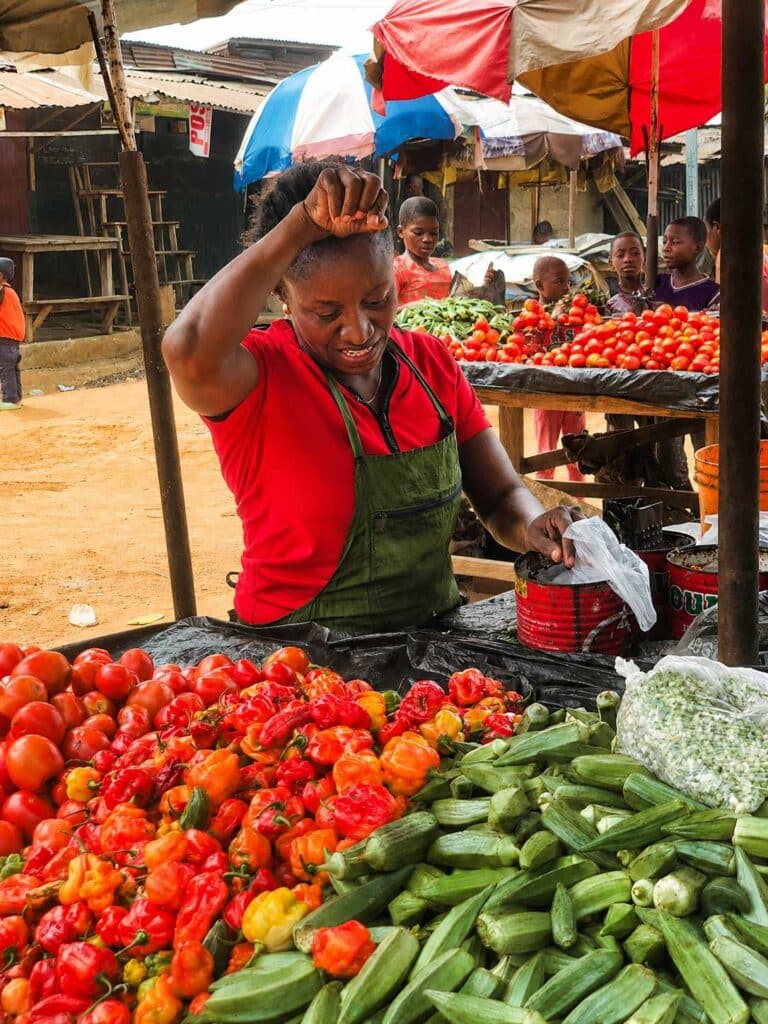
Market vendor in a red shirt and green apron handling peppers and tomatoes at a bustling outdoor stall.

Nigerian food market vendorPhoto: Fireworks Uche from Pexels

The hub is located in Ketu-Ereyun, in the Epe division of Lagos State. It is being developed as a modern, technology-driven facility to transform food transportation, storage, processing, and distribution. 


It will feature cold and dry storage systems, quality control laboratories, processing centres, digital trading platforms, truck parks and modern warehouses. 


Africa’s leading food systems hub. 


According to Olusanya, the state’s long-term aim is to position Lagos as Africa’s leading food systems hub. 


She added that Lagos, regarded as Nigeria’s largest food market, continues to struggle with supply chain disruptions, rising transportation costs, poor storage infrastructure and significant post-harvest losses due to its dependence on food supplies from outside the state. 


“This will mark a major turning point in Lagos State’s food systems transformation journey and demonstrate that Lagos is responding to food security challenges through long-term infrastructure,” the commissioner said. 


“When food supply is predictable, logistics are efficient and market systems are structured, prices become less volatile.” 

author avatar
Jason Lottering