
Airline body urges African governments to act on opening market access
‘Strategies don’t move people. Now it is time to make the difficult decisions and execute them,’ senior executive stresses.
DISTRIBUTION STRATEGY
By our News Team | 2023
Grassroots programme that empowers micro-entrepreneurs will be grown in Kenya and extended to Tanzania and Rwanda, company says.
Global confectionary company Mars Wrigley has announced an extension of its already successful Maua programme that empowers micro-entrepreneurs in Kenya to sell to hard-to-reach-consumers in rural areas.
The distribution model has been operating since 2013 and already has around 1,600 people involved. They sell Mars Wrigley chocolate and chewing gum brands such as Juicy Fruit, Orbit, PK, Doublemint and Big G.
Kenya’s Maua route-to-market programme will expand to Tanzania in 2024 and to Rwanda in 2025. Photo courtesy of Mars Wrigley
An additional 1,000 Kenyans will now be added to the Maua programme. The company also has plans to expand the concept to Tanzania in 2024 and to Rwanda in 2025.
In simple terms, Maua is a route-to-market strategy which targets consumers who are hard to reach through traditional product distribution channels. To do so, it trains small-scale local entrepreneurs and equips them with the necessary tools of the trade – such as backpacks, bicycles or motorcycles – as well as training them in skills like record-keeping, branding and business management.
According to Mars Wrigley, the programme has an 85% retention rate among the micro-entrepreneurs it recruits.
Recently, a ceremony was held in Kenya’s Machakos County to mark the 10th anniversary of Maua and announce the expansion of the programme. Among the special guests were Machakos County Governor, Wavinya Ndeti, the company’s General Manager for Middle East and Africa, Duncan McCulloch, and Mars Wrigley General Manager for Sub-Saharan Africa, Ismael Bello.
“Maua has been a phenomenal success in driving our quest to reach the under-served consumer market while at the same time achieving our social and sustainability goals. Hence, the plan to expand the program in Kenya and the region,” Bello said at the event.
“With Maua, we seek to not only grow our business, but also create a platform to build both financial and social capital, working with individuals who are passionate about business and improving lives. We look forward to the next 10 years of Maua’s transformative impact.”
The Governor praised the Maua initiative as an inspiring model of how private companies can use innovative strategies to create employment and sustainable livelihoods – especially for women and youth – while supporting the growth of micro- and small-scale enterprises.
“I am particularly delighted to note that four out of 10 beneficiaries of this noble initiative are women. I urge more companies to emulate Wrigley so that together, we can create meaningful livelihood and business opportunities for our people,” she said.

‘Strategies don’t move people. Now it is time to make the difficult decisions and execute them,’ senior executive stresses.

UTB says its ambition is to turn the visibility into interest, bookings and more visitors choosing to explore Uganda.

Short ads shown on TV increased website visits within five minutes of airing by 10-40% compared with longer advertisements.

Supeco’s rapid expansion shows how the discount model is becoming a bigger part of grocery retail in the North African country.

Consumers reward visible eco-friendly additions such as reusable bottles, but give little credit to businesses that reduce or remove products.
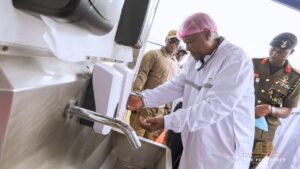
Nestlé believes Ghana will continue to play a leading role in the future of Central and West Africa.
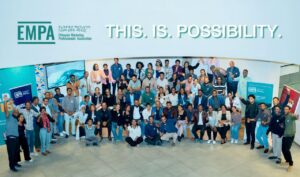
Ethiopia’s marketers gather to celebrate hosting next year’s conference – but with an eye on the hard work ahead.

Tech is creating more ways for audiences to connect, but lasting value will come from understanding the people behind those connections.

The new production line at the historic Maydon Wharf facility in Durban will address growing international demand.

Tanzania, Kenya, Zimbabwe, Ethiopia and South Africa all feature in the African meetings, incentives, conferences and exhibitions awards.
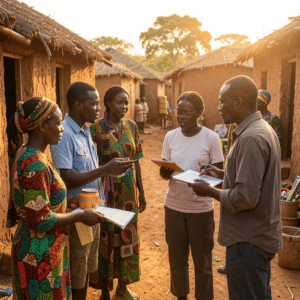
Much of the broader conversation around AI in market research assumes conditions that do not consistently exist across many African markets, writes Soyinka Witness.