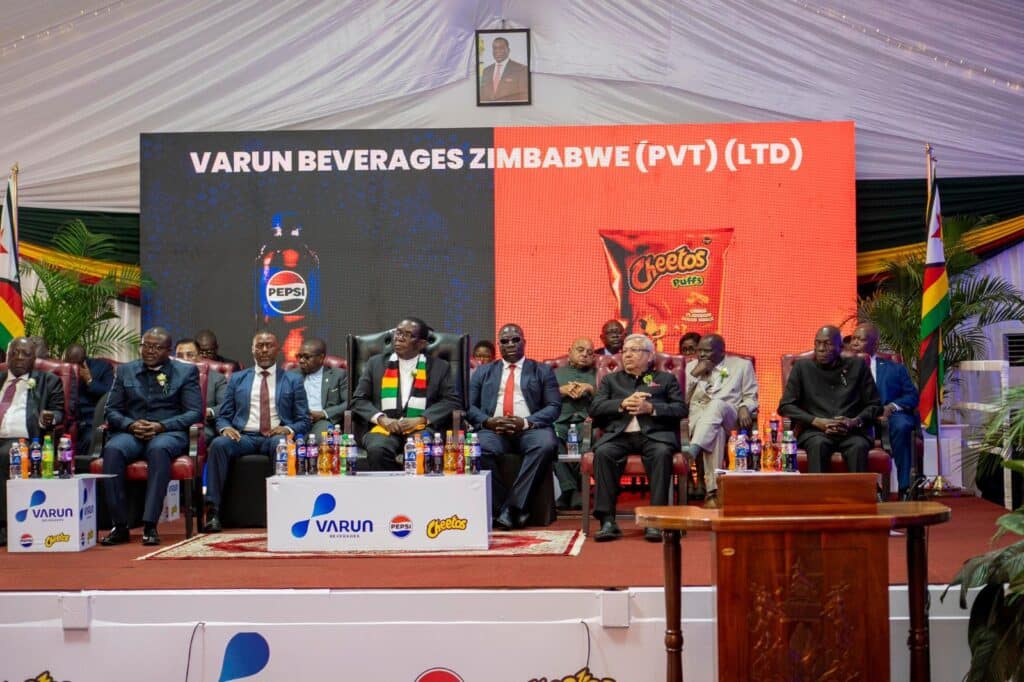
Landmark gathering gets underway with delegates from over 30 countries
Opening plenary hears that securing Africa’s economic future requires businesses to discover new customers and cross-border opportunities.
Photo: Varun Beverages via Facebook
Varun Beverages Zimbabwe has inaugurated its Cheetos Snacks Plant and laid the foundation stone for its upcoming Juice & Dairy Blend Juice Plant.
The snacks plant represents an investment of US$40-million and has been described as a major boost to the country’s industrialisation drive.
Varun Beverages Zimbabwe is a subsidiary of Varun Beverages Limited, one of the world’s largest bottling partners for PepsiCo outside the United States. Operating out of a manufacturing complex in Harare, it produces, bottles and distributes PepsiCo drinks and snacks.
The operation now directly employs around 2,000 people and supports an estimated 13,000 indirect jobs across logistics, retail, distribution and agriculture-linked value chains.
Growing confidence in the economy
Speaking at the opening, the President of Zimbabwe, Emmerson Mnangagwa, said the investment reflects growing confidence in the economy.
It marks “industrial diversification, creation of employment opportunities for our people and manufacturing sector integration into both regional and global value chains”, the President stated.
He emphasised that eight years ago the company had just one production line producing 10-million bottles per month. Today, the facility has five more lines, with capacity reaching nearly 120-million bottles per month.
Comments Varun Beverages in a social media post: “This occasion also reflects our broader long-term commitment towards Zimbabwe through planned investments of nearly US$650-million across manufacturing, beverages, beer, renewable energy, PET recycling and allied sectors, including [a] proposed solar power project.
“Our vision is not only to grow local manufacturing and create employment opportunities, but also to support sustainability, recycling initiatives and a greener future for Zimbabwe.”

Opening plenary hears that securing Africa’s economic future requires businesses to discover new customers and cross-border opportunities.

Participants challenged to identify, articulate and commercialise the cultural assets that make their brand ready for a global audience.

Second outlet planned for Nairobi before year end, with Nigeria, South Africa and Morocco said to be future target markets.

Online search behaviour has changed significantly with the rise of AI. How can African brands adapt to this new marketing landscape?

Researchers propose a framework for packaging that senses, learns and acts – making packaging an active, AI-powered tool against food waste.

Country needs marketers to build recognition and consumer trust around Malawian products and national brand, says Deputy Minister.