
BUSINESS STRATEGY

President Mahama commissions expanded evaporated milk facility in Ghana

By our African Marketing Confederation News Team | 2026

Nestlé believes Ghana will continue to play a leading role in the future of Central and West Africa.

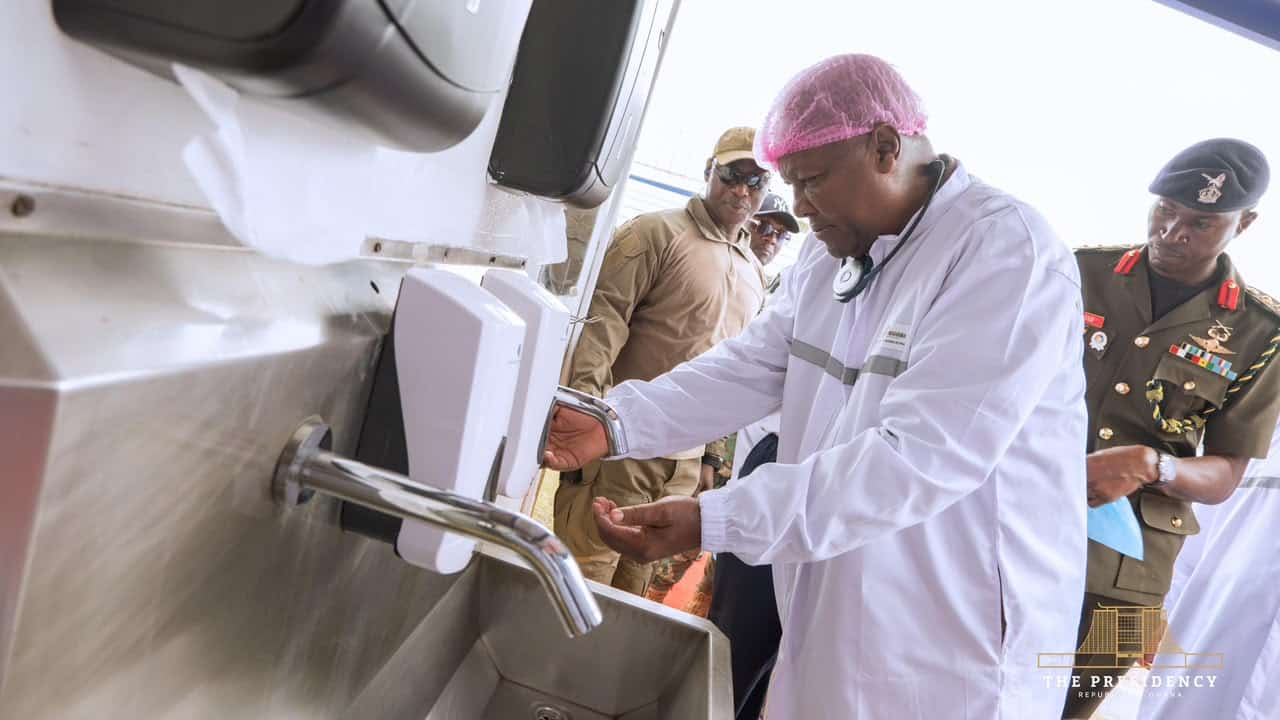
Medical professional in a white coat and pink hairnet demonstrates handwashing at a stainless steel station while soldiers watch nearby

President Mahama inspects

President John Dramani Mahama recently commissioned Nestlé Ghana’s expanded evaporated milk production line at its Tema factory, located about 25km east of Accra. 


The US$5.06-million (GHS 59-million) modernisation project is designed to significantly increase manufacturing capacity, improve operational efficiency, and supply both domestic and regional markets. 


President Mahama noted that predictable fiscal policies, controlled inflation, stable foreign exchange rates, and a resilient energy grid are essential to giving commercial enterprises confidence to deploy large-scale capital.  


He assured corporate investors that the government will continue policy interventions to maintain macroeconomic stability and upgrade key infrastructure. 


“Capital goes where it is safe, but it stays and expands where there is stability and supporting infrastructure,” the President said, adding that the government will continue delivering reliable power and sound economic conditions to drive industrial transformation. 


Enduring commitment to local manufacturing 


Reaffirming the company’s long-term commitment to the country, the Managing Director of Nestlé Ghana, Salome Azevedo, said: “This milestone is more than the completion of a major investment; it is a strong expression of Nestlé’s confidence in Ghana, our enduring commitment to local manufacturing, and our conviction that Ghana will continue to play a leading role in the future of Central and West Africa.” 


The upgraded facility builds on Nestlé’s earlier US$15.03-million (GHS175.4-million) cereal line investment.  


The company also announced plans to double its Milo production capacity and install another evaporated milk line, further cementing Ghana’s position as a regional manufacturing hub.