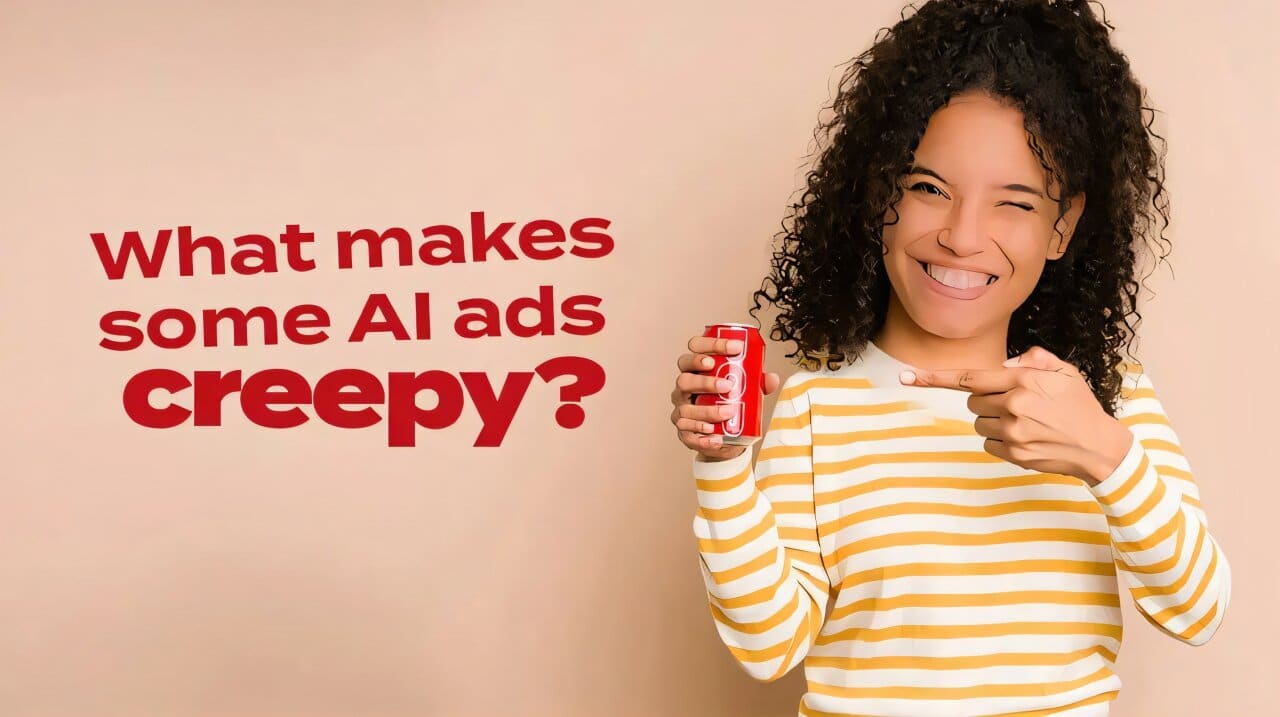
Artificial intelligence can create realistic depictions of just about anything, but that does not mean advertisers should lean on the technology, according to a study led by University of Mississippi professors in the US.
Published in the peer-reviewed Journal of Interactive Advertising, researchers Chang-Won Choi and Robert Magee sought to find out why consumer reactions differ and how advertisers can best employ AI in their work.
“Nowadays, many marketers are just saying, ‘Hey, why don’t we use AI?’ but I don’t recommend that,” says Choi, Assistant Professor of Integrated Marketing Communications. “Marketers should start with the campaign idea first and ask, ‘Is AI necessary’?”
Adds Choi: “It’s a simple question. If the answer is yes, the reason why should be clearly understood.”
In 2025, Coca-Cola’s Create Real Magic platform offered fans an opportunity to create art using the soft drink company’s logo through AI-generated images. Allowing users to create thousands of unique art pieces without AI would be difficult, if not impossible, the researchers point out.
“That’s an example of when consumers can easily understand why the advertiser used AI,” Choi notes.
When AI is used unnecessarily
But advertisements where AI is used unnecessarily, such as creating animation that could be made by human designers, can leave consumers feeling upset or unnerved.
In the case of Coca-Cola’s 2025 Christmas holiday commercial, those feelings led to one YouTube commenter calling the ad “the most profitable commercial in Pepsi’s history”.
Some consumer concerns arise from the ‘uncanny valley effect’, where a human-like machine induces feelings of unease.
“We’re basically programmed to look at everything, whether human or object, and make snap judgments about them,” notes Magee, an Associate Professor of Integrated Marketing Communications.
“We make these quick decisions, but then our conscious mind reflects and thinks, ‘Machines do not feel, but this machine is telling me that it does’. That’s where this conflict comes from – when something is almost human, but not quite.”
Using AI to try to engender an emotion, such as a generated depiction of a hurt or hungry child, can leave consumers feeling tricked, the researchers warn.
“Marketers need to be very careful to remind people that they are an organisation of people, not just a brand and not just a company,” Magee says. “It’s easy to think of an organisation as something impersonal, and to counteract that you need to underline the human aspect.”
Even when the uncanny valley effect is not at play, consumers can still feel that marketers have taken a shortcut by using AI, Choi believes.
“That’s what we call the ‘AI-ad theme match’,” he explains. “A strong match is when AI is an important part of how the campaign works; like if the intention is to give each consumer a personal experience that would otherwise be impossible.
“In that case, AI is not just a cheaper production tool; it’s an important part of the creative idea.”
Magee concedes that the extent to which consumers feel negatively about the use of AI may change as the technology becomes more widespread.
“Right now, because AI is new, it’s better to err on the side of being careful,” he says. “But norms change. You don’t see as many people thinking about CGI (computer-generated imagery) in movies anymore. No one gets upset about it like they used to.”
You can read more about the research here.