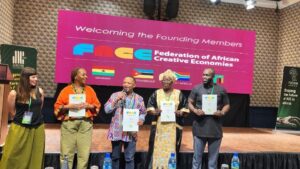
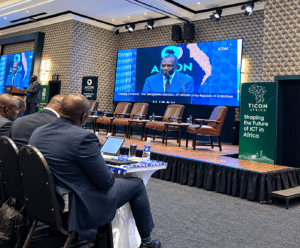
Speaking at the AMC Marketing Forum in Mombasa last week, the Executive Director of Africa No Filter, Moky Makura, told delegates that the NPO’s research showed five key frames around which most stories about Africa are being told: ‘poverty’, ‘poor leadership’, ‘corruption’, ‘conflict’ and ‘disease’.
In addition, there are three narratives through which the world is viewing Africa: ‘Africa’ is broken’, ‘Africa is dependent’ and ‘Africa lacks the agency to create the change that it needs’.
Nigerian-born Makura, who has been with Africa No Filter since its inception in 2020 as an organisation working to challenge and change harmful narratives about the continent, said it’s the third description that bothers her the most.
“The thing is that narrative matters,” she said. “Narrative matters because it informs our belief systems [and] it shapes how we think. But, more importantly, it shapes how we act,” she explained. “It affects how the world sees us as Africans, and it affects how we as Africans see ourselves.
“It informs aid policy, investment into Africa, trade policies … African countries pay more for debt because there is a perceived risk, often not based on any data. So, it’s actually costing us.”
Africa No Filter estimates that negative media narratives alone are costing Africa US$4.2-billion in lost investment a year, Makura said.
Africans don’t believe in the African dream
Too many young people want to leave Africa because they believe in the American Dream or the European Dream – but not in the African Dream because of the negative narrative around the continent.
According to Makura, a recent media study done by the NPO in conjunction with the University of Cape Town found that the stores about Africa covered by mainstream international media still revolved around conflict, election violence, ethnic violence and corruption.
In addition, these media outlets said they “covered Africa”. But, in reality, that coverage came down to only a handful of African countries.
Another study, on how African media outlets cover Africa, found that many stories about other African countries we also coming from the same international news agencies that were shaping the narrative about Africa for overseas audiences. And over a third of those were penned by non-African sources.
Looking to the future, Makura said the role of Africa No Filter is to advocate for the telling of more of the good stories about Africa, and to tell them better. Stories that inspire, stories that inform, stories that tell of successes.
“We don’t tell enough of those stories; we just don’t,” she said. “If news doesn’t change, people are going to go and find their own news – and that’s dangerous.”
Role of Africa’s marketers
The role of African marketers and others working on brands is to help with promoting the good stories, Makura said.
“Companies and brands are all looking to be relevant and for people to engage with them. And the biggest trend – that has been hiding in plain sight – is Africa and Africa’s culture. It is viral, it’s everywhere, and young people are engaging with film, music and everything cultural.” Marketers should use this, she said.
Makura ended with a proverb: “Until lions learn to write, hunters will tell their stories for them.” She urged: “Let us be the lions that write.”