
Pre-conference masterclass discusses taking African brands to the world
Participants challenged to identify, articulate and commercialise the cultural assets that make their brand ready for a global audience.
MOBILE CONNECTIVITY
By our African Marketing Confederation News Team | 2024
This connectivity is also enhancing internet penetration. Mobile money adoption, for example, has risen notably.
In 2024, mobile penetration in Tanzania has increased and there are approximately 67.7–million mobile connections – accounted for 99% of the total population.
Photo: Neil Palmer for CIAT, via Wikimedia Commons
This marks a significant rise from the previous year, when there were 57.42-million mobile connections, amounting to 86.4% of the population.
However, accurately assessing mobile penetration remains challenging due to the prevalence of multiple-SIM usage, as highlighted in the ‘Mobile Phone and App Usage in Africa Survey’.
Importantly, mobile connectivity enables greater internet penetration. Mobile technology, including services like Vodacom’s M-Pesa and Tigo Pesa, has revolutionised the finance, education and healthcare sectors.
Tanzania positioned to harness benefits of Fourth Industrial Revolution
In a blog post published last week, Newton Adika, Digital Marketing Specialist at market research firm Geopoll, says this means Tanzania is well-positioned to harness the benefits of the Fourth Industrial Revolution for inclusive growth and sustainable development.
The growing tech startup ecosystem, supported by incubators and accelerators, drives economic development and job creation.
“Industry reports show that Tanzania has experienced a significant increase in mobile internet adoption in recent years,” Adika writes in the blog post.
“As of February 2024, approximately 81% of mobile connections in Tanzania were broadband, ranging from 3G to 5G. This represents an increase from 60% in the previous year, indicating a continuing upward trend.”
Looking specifically at the mobile banking sector, Adika says mobile money adoption in Tanzania increased from 60% in 2017 to 72% in 2023, according to the ‘FinScope Tanzania 2023’ report.
However, the country is still trailing behind regional neighbours such as Kenya and Uganda in adopting mobile money for airtime purchases, for example.
You can read the full blog post here.

Participants challenged to identify, articulate and commercialise the cultural assets that make their brand ready for a global audience.

Second outlet planned for Nairobi before year end, with Nigeria, South Africa and Morocco said to be future target markets.

Online search behaviour has changed significantly with the rise of AI. How can African brands adapt to this new marketing landscape?

Researchers propose a framework for packaging that senses, learns and acts – making packaging an active, AI-powered tool against food waste.
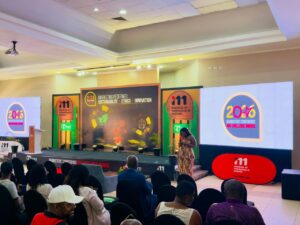
Country needs marketers to build recognition and consumer trust around Malawian products and national brand, says Deputy Minister.

Fashion brand suspends giant lingerie high above the city’s streets, using shadows to create a moving billboard for pedestrians and motorists.

Researchers describe AI influencers as having a ‘dual identity’. Consumers evaluate both ‘person’ and ‘technology’ identities at once.

Reputation and trust, once modest influences on hotel choice, have become some of the strongest predictors of patronage, study finds.

South African brands are increasingly setting the global benchmark for customer loyalty strategies, organisers say.

Global influences among younger consumers are still present, but they are being filtered through a distinctly Zambian lens.

Researchers find that lack of perceived ‘genuine care’ is the mechanism connecting AI involvement to lower trust ratings.