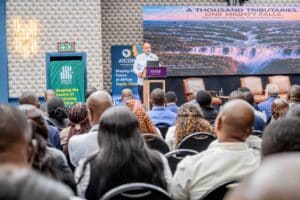
Africa’s economic reset requires moving from ambition to execution
The Africa Commerce Convergence Summit keynote address identified four elements that must converge if the continent is to achieve a meaningful economic reset.
RETAIL STRATEGY
By our News Team | 2022
More than half of consumers say they are giving more thought to the social and environmental impact of their purchases before they buy.
Australian consumers are rejecting the throwaway culture, instead snapping up sustainable options, according to new research from Monash University.
A report released by Monash Business School’s Australian Consumer and Retail Studies (ACRS) research unit has found that local consumers want sustainable products and are increasingly looking for more environmentally conscious shopping options.
Photo by Tom Fisk from Pexels
More than half (52%) of the 1,000 shoppers surveyed for the latest retail monitor report ‘Spotlight on Sustainability’, say they are giving more thought to the social and environmental impact of their purchases before they buy, and are even willing to pay more for products that are ethically produced.
Among the report’s key findings:
“Today’s customers are sustainability savvy and they are increasingly contemplating the social and environmental footprint of their purchases before they buy,” says the report’s lead author Dr Eloise Zoppos, Principal Research Consultant and Research Fellow in the ACRS research unit, in Monash Business School’s Department of Marketing.
“Pleasingly, both industry and government are taking note, actively seeking sustainable solutions to meet consumer demand and making sustainability a priority,” she adds.
Over the last three months, participants in the Spotlight on Sustainability survey purchased clothes, footwear and accessories (70%), personal care (49%), household goods (42%), books and stationery (38%), consumer electronics (26%), toys and games (24%) travel and tourism (21%), media and entertainment (18%), automotive (16%) and sporting goods and equipment (16%).
Consumers want locally sourced and produced goods
The report’s findings show that consumers are notably keen to support locally sourced and produced goods (44%) and increasingly aware of the benefits of offsetting costly carbon emissions from shipping and transportation, they are also prepared to pay more for locally produced items.
And, they are walking the talk, with 96% engaging in sustainable practices such as bringing their own shopping bags and recycling product waste regularly, over the three months of the survey.
“It is clear from our research that sustainable shopping practices are important to us, and from a lifestyle perspective, most Aussie shoppers are engaging with sustainable lifestyle practices and are committing to them,” says Dr Zoppos.
Aussie shoppers are increasingly more conscious of the environmental impact of their purchases and everyday activities and believe they can make a difference—and many retailers are getting on board, the report says.
Premium outdoor clothing and gear label Patagonia is leading by example, successfully making the promise of durable and repairable products a core promise of their brand. Their ‘Ironclad Guarantee’ offer – allowing customers to repair, replace or refund products that do not meet expectations – has proven very popular.

The Africa Commerce Convergence Summit keynote address identified four elements that must converge if the continent is to achieve a meaningful economic reset.

Vongani Mageza brings more than 20 years’ experience across financial services and FMCG) companies such as FNB and Diageo.

AI agents will influence shopping, algorithms will supersede social connections, and the clip economy will change how brands connect.

The brand partnership includes a new TV commercial featuring Kipchoge, digital storytelling, wellness initiatives and community programmes.

Modern retail in Africa is still dwarfed by the traditional trade. Marketers who dismiss this relationship-heavy retail model do so at their peril.

Research finds brands don’t just sell products. They can also provide employees with stories through which they feel their work is meaningful

Honesty must be demonstrated through transparency, accountability and action – shaping both reputation and future trust following a crisis.

In the funeral plan category, where most advertisements look like an obituary, Standard Lesotho Bank opted to ‘sell the cow’, not the policy.

Strategic Marketing for Africa, the publication for deep-thinking African marketing professionals, is not to be missed.

CEO of Scopen says the expansion into East Africa is a natural progression following the success of the research in South Africa.

Report says around 80% of Africa’s annual goods export potential to the Caribbean remains untapped.