
Airline body urges African governments to act on opening market access
‘Strategies don’t move people. Now it is time to make the difficult decisions and execute them,’ senior executive stresses.
MARKETING MAGAZINES
By our African Marketing Confederation News Team | 2025
Issue 4 2024 of Strategic Marketing for Africa, the magazine for deep-thinking industry professionals, provides latest in-depth insights.
The current issue of Strategic Marketing for Africa, the quarterly magazine of the African Marketing Confederation (AMC), is available online via the AMC website.
Issue 4 2024 is packed with marketing-related news, in-depth features, and thought-leadership content from across Africa. Here are some of the highlights of the current issue.
Inclusivity can be a catalyst for authentic connections
Consumers in Africa and elsewhere increasingly expect brands to use diversity, equity and inclusion (DEI) thinking to avoid insulting, insensitive or biased messaging.
Issue 4 2024 of Strategic Marketing for Africa
In the case of Nigeria, a 2024 study by The Culture Factor Africa showed a high correlation between ethnic diversity and return on assets in the West African nation. It noted that diverse teams were 70% more likely to capture new markets, while financial returns were “35% more likely higher in ethically diverse teams”.
Similarly, Kantar’s recent Brand Inclusion Index 2024 report notes that “75% of consumers globally say that diversity and inclusion – or the lack thereof – influence their purchase decisions”.
According to Amit Nanoo, Human Centric Growth Strategist in Kantar’s Insights Division, what sets Africa apart from the rest of the world is that while, globally, minorities and marginalised groups are underserved, “in Africa it’s the majority of people who are underserved”.
What does this mean for Africa-focused brands? “People [in Africa] are looking to brands to take up the social and commercial responsibility to be more inclusive,” explains Nanoo.
Africa’s consumers are moving from ‘tension’ to ‘intention’
Ipsos recently released its Global Trends 2024 report, titled ‘In Search of a New Consensus: From Tension to Intention’, which interviewed more than 50,000 people across 50 markets – including from six countries in Africa.
According to the study, South Africa and Nigeria have seen an increase in positive perceptions of globalisation, with many viewing it as a catalyst for economic growth and development. Seventy-five percent of respondents in Nigeria and 70% in South Africa believe that globalisation has a positive impact on their country, highlighting a general optimism towards global interconnectedness.
However, this optimism is tempered by concerns over national sovereignty and cultural identity. In Kenya and Zambia, there is a strong sense of national pride, with 82% of Kenyans and 78% of Zambians expressing pride in their nationality. This duality reflects a broader global trend where people appreciate the benefits of a globalised world, but also yearn for a stronger sense of local identity.
For businesses operating in Africa, the challenge lies in leveraging global scale while remaining attuned to local nuances – a delicate balance that could determine success in these markets.
You will find these stories, and much more, in the latest Strategic Marketing for Africa – the voice of African marketing and the official publication of the African Marketing Confederation (AMC). Read Issue 4 2024 online here.
A Print Edition of the magazine is also available.

‘Strategies don’t move people. Now it is time to make the difficult decisions and execute them,’ senior executive stresses.

UTB says its ambition is to turn the visibility into interest, bookings and more visitors choosing to explore Uganda.

Short ads shown on TV increased website visits within five minutes of airing by 10-40% compared with longer advertisements.

Supeco’s rapid expansion shows how the discount model is becoming a bigger part of grocery retail in the North African country.

Consumers reward visible eco-friendly additions such as reusable bottles, but give little credit to businesses that reduce or remove products.

Nestlé believes Ghana will continue to play a leading role in the future of Central and West Africa.
Ethiopia’s marketers gather to celebrate hosting next year’s conference – but with an eye on the hard work ahead.

Tech is creating more ways for audiences to connect, but lasting value will come from understanding the people behind those connections.

The new production line at the historic Maydon Wharf facility in Durban will address growing international demand.

Tanzania, Kenya, Zimbabwe, Ethiopia and South Africa all feature in the African meetings, incentives, conferences and exhibitions awards.
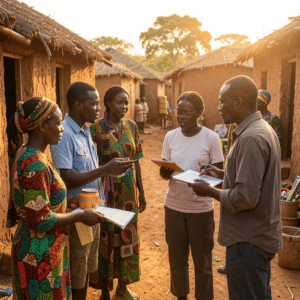
Much of the broader conversation around AI in market research assumes conditions that do not consistently exist across many African markets, writes Soyinka Witness.