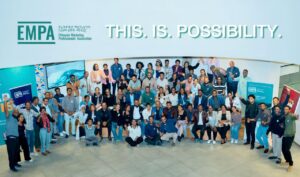
Pre-conference masterclass discusses taking African brands to the world
Participants challenged to identify, articulate and commercialise the cultural assets that make their brand ready for a global audience.
BRAND CAMPAIGNS
By our News Team | 2023
After huge global promotion and a dizzying array of brand extensions, the famous doll attracts huge cinema audiences on its debut weekend.
The biggest global marketing campaign of the year – perhaps the decade – reached its first stage of completion this past weekend when the long-awaited Barbie movie opened in cinemas around the world.
Mattel, the US-based toy company that manufactures the iconic Barbie doll, is hoping the full-length film featuring Hollywood stars such as Ryan Gosling and Helen Mirren will boost the brand in the same way that the 2014 release of The Lego Movie helped to enhance the famous plastic-brick toy brand (although subsequent Lego-based films proved less popular).
Photo courtesy of Warner Brothers Pictures
If Barbie is a box office and marketing success, it could pave the way for more movies that will promote other Mattel toy brands – among them Hot Wheels and Fisher Price.
It’s a case of ‘so far, so good’ for Barbie, which grossed US$155-million in US and Canadian cinemas alone on the opening weekend, according to distributors Warner Brothers. This gives it the highest-grossing debut of 2023 to date.
“The picture pokes fun at the history of the doll while addressing criticisms about her unrealistic figure and materialistic nature. It follows the character as she breaks out of the perfect world created by toymaker Mattel Inc. and into one with real people on whom the doll has had an impact,” explains news agency Bloomberg News.
Barbie has enjoyed big-budget advance marketing and publicity, as well as the benefit of many product and marketing tie-ups with other brands.
Fashion brands Gap and Forever 21, for example, have released official clothing lines with Barbie in mind.
A pink luggage collection and Barbie shoes
Beis, one of the most popular travel and luggage brands of 2023, released a range of bright pink luggage (Barbie’s official hot pink is Pantone 219-C) ahead of the movie launch.
Aldo, a Canadian footwear company, unveiled Barbie platform shoes and promoted the range on TikTok, resulting in a sellout in 24 hours and an overall 48% increase in e-commerce traffic to its website.
In Brazil, the Burger King fast-food chain released a Barbie Burger featuring bright pink sauce. In various countries, there are also Barbie-branded rugs, candles, glassware, Xbox controllers and toothbrushes.
There is even a real-life Barbie DreamHouse, located in the exclusive area of Malibu near Los Angeles, that you can rent on Airbnb.
Sameer Hosany, Professor of Marketing at Royal Holloway University of London, notes that Mattel has successfully extended Barbie’s brand to capture new audiences, drive growth and expand into new types of products beyond dolls.
“This is a risky endeavour if the brand is stretched too far. But Barbie’s brand has been successfully extended into other profitable categories such as clothes, accessories, cosmetics and entertainment (music, movies and games),” he says.
Perhaps surprisingly, given that the toy range is targeted at young children, Barbie the movie carries an age restriction rating of PG 13 (no under-13s) from the Motion Picture Association because of suggestive references and use of certain language.
This, observes the publication Business Insider, indicates that the movie is mainly trying to appeal to older audiences who have memories of growing up with Barbie.
The Barbie doll has had a varied history since being launched in the late 1950s. Its original appearance – white, blonde and impossibly thin – was criticised many times for its lack of diversity and unrealistic portrayal of the ideal body female type.
In later years, the range was extended to include dolls of various races and body types, as well as people with disabilities and certain illnesses.

Participants challenged to identify, articulate and commercialise the cultural assets that make their brand ready for a global audience.

Second outlet planned for Nairobi before year end, with Nigeria, South Africa and Morocco said to be future target markets.

Online search behaviour has changed significantly with the rise of AI. How can African brands adapt to this new marketing landscape?

Researchers propose a framework for packaging that senses, learns and acts – making packaging an active, AI-powered tool against food waste.

Country needs marketers to build recognition and consumer trust around Malawian products and national brand, says Deputy Minister.

Fashion brand suspends giant lingerie high above the city’s streets, using shadows to create a moving billboard for pedestrians and motorists.

Researchers describe AI influencers as having a ‘dual identity’. Consumers evaluate both ‘person’ and ‘technology’ identities at once.

Reputation and trust, once modest influences on hotel choice, have become some of the strongest predictors of patronage, study finds.

South African brands are increasingly setting the global benchmark for customer loyalty strategies, organisers say.

Global influences among younger consumers are still present, but they are being filtered through a distinctly Zambian lens.

Researchers find that lack of perceived ‘genuine care’ is the mechanism connecting AI involvement to lower trust ratings.