Watchdog instructs auto brand to remove or amend TV ad campaign
SA’s Advertising Regulatory Board finds Kia advertisement could be offensive to people with certain health disorders.
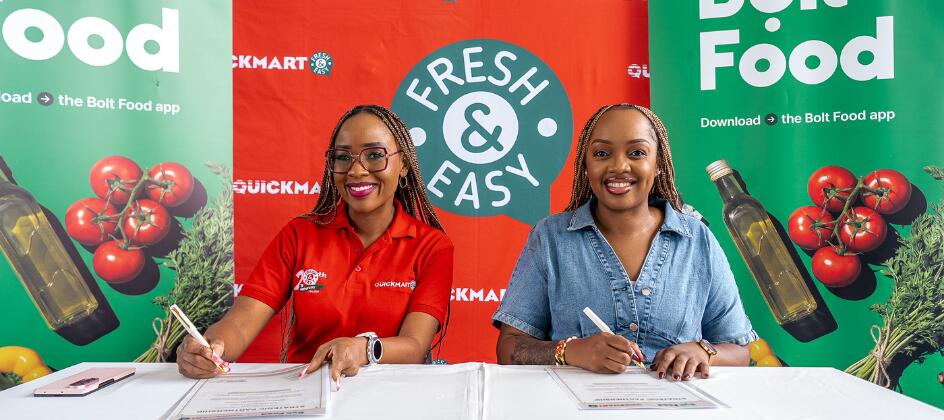
Betty Wamaitha of QuickMart (left) and Kimberly Riziki of Bolt Food during the partnership launch
Bolt Food Kenya, the on-demand delivery platform owned by the European ride-hailing company Bolt, has expanded beyond restaurant delivery into on-demand retail via a partnership with QuickMart Supermarkets.
This gives Bolt Food customers access to 12,000 delivery products available through QuickMart’s 60-plus store locations.
It is a strategic shift for the Bolt online platform, moving it beyond restaurant delivery into a multi-category convenience platform encompassing groceries, household goods, beverages, and wellness products for doorstep delivery.
“This partnership is a significant step in how we are evolving Bolt Food, from a food delivery service to a platform that supports everyday needs,” says Ali Zaryab, Bolt Food General Manager for Kenya and Ghana. “Our goal is to be Kenya’s most trusted and convenient delivery platform.”
Focus on convenience and accessibility
For Quickmart, the collaboration aligns with its long-term focus on enhancing convenience and accessibility for households across the country.
“As Quickmart celebrates 20 years of serving Kenyan households, this partnership with Bolt Food is a powerful step in delivering on our promise of convenience,” says Chief Marketing Officer, Betty Wamaitha.
“By enabling customers to access Quickmart’s wide range of quality goods and services through on-demand delivery, we are making everyday shopping easier, faster and more accessible.”
“The partnership launches at a time when Kenya’s digital economy continues to grow, with increased adoption of platform-based work and online retail services,” reports The Star, a Kenyan daily national newspaper and digital news platform.
A joint Bolt-Ipsos report estimates the sector supports approximately 1.5-million workers and contributes over KES100-billion (US$773-million) annually to the economy, with 53% of gig workers citing platform-based work as their primary income source.

SA’s Advertising Regulatory Board finds Kia advertisement could be offensive to people with certain health disorders.

Global study finds AI is helping marketers produce more – but is not creating the time and creative space they expected.

Urban Africa will double its footprint, adding the equivalent of more than 4,000 Manhattans or almost 400 Singapores, The Economist reports.

Luc Demez brings experience from Europe and African countries as the Carrefour brand looks to expand into Nigeria with a local partner.

What makes brands successful in Africa? A summary of the award-winning paper presented at Esomar’s first conference in Africa.

Woolworths supermarket chain embraces an AI-powered chef as it leverages two decades of recipes to answer an age-old family question.