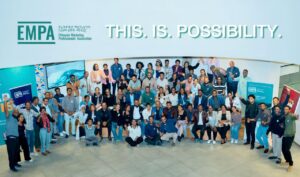
Pre-conference masterclass discusses taking African brands to the world
Participants challenged to identify, articulate and commercialise the cultural assets that make their brand ready for a global audience.
LOGOS
By our News Team | 2023
Twitter’s surprise rebranding has brought with it a logo change – and much debate. It may take time for the strategic intent to become clear.
In late July, maverick entrepreneur Elon Musk changed the famous Twitter brand and logo to ‘X’, apparently as part of a bigger picture to create ‘the everything app’.
Later, his recently appointed Twitter (now X) CEO, Linda Yaccarino, explained that “X is the future state of unlimited interactivity – centred in audio, video, messaging, payments [and] banking – creating a global marketplace for ideas, goods, services and opportunities”.
Photo via Business Upturn
All the upheaval at Twitter (now X), has created major concerns among users and advertisers, with Facebook founder Mark Zuckerberg seizing the opportunity to launch Meta’s rival platform, Threads.
The rebrand to X has, of course, meant a new logo – which has created another round of debate.
Dr Thomas Oosthuizen, a South African marketing consultant and academic now based in the United Kingdom, is among those to enter the discussion around the new X logo, and logos in general.
Good logos signify a brand’s role in the world
“Whilst we all love debating them, their primary role is to signify a brand and, if it’s really good, what its role is in this world. That is, technically, what a logo is. To portray and inspire,” he writes in a LinkedIn social media post.
“Very few brands are inherently meaningful, meaning the logo summarises what it stands for. Nike – yes. FedEx – yes. Yet many people may still not make the connection. Logo meanings mostly needs to be learnt.”
Oosthuizen believes that social media brands are almost all meaningless. “A blue thing around Facebook – okay. Instagram is better. An infinity sign (skew at that) around Meta? LinkedIn – what logo?”
He says he liked Twitter’s bird logo, which was cheeky and had significance.
“At least Twitter had inherent meaning when a tweet was 140 characters, as a tweety-bird that lasted the length of time some presidents spent on the loo. An X uses little imagination … is it different from most logos? No.”
Oosthuizen adds that, as no-one can own a letter of the alphabet, it’s meaning needs to be created.
In the case of the X logo, and the new brand in general, he believes that very little Musk does is meaningless.
“By now we don’t know what to expect from the man [who] has the innovative Midas touch, for all his ‘madness’. So, forget about the X … look at what he does with it.”
You can read the full post here.

Participants challenged to identify, articulate and commercialise the cultural assets that make their brand ready for a global audience.

Second outlet planned for Nairobi before year end, with Nigeria, South Africa and Morocco said to be future target markets.

Online search behaviour has changed significantly with the rise of AI. How can African brands adapt to this new marketing landscape?

Researchers propose a framework for packaging that senses, learns and acts – making packaging an active, AI-powered tool against food waste.

Country needs marketers to build recognition and consumer trust around Malawian products and national brand, says Deputy Minister.

Fashion brand suspends giant lingerie high above the city’s streets, using shadows to create a moving billboard for pedestrians and motorists.

Researchers describe AI influencers as having a ‘dual identity’. Consumers evaluate both ‘person’ and ‘technology’ identities at once.

Reputation and trust, once modest influences on hotel choice, have become some of the strongest predictors of patronage, study finds.

South African brands are increasingly setting the global benchmark for customer loyalty strategies, organisers say.

Global influences among younger consumers are still present, but they are being filtered through a distinctly Zambian lens.

Researchers find that lack of perceived ‘genuine care’ is the mechanism connecting AI involvement to lower trust ratings.