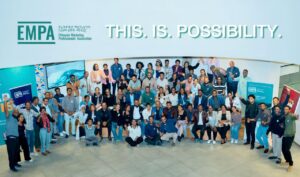
Pre-conference masterclass discusses taking African brands to the world
Participants challenged to identify, articulate and commercialise the cultural assets that make their brand ready for a global audience.
TRADE MAGAZINE ADVERTISING
By our News Team | 2021
Seventy-eight percent of SMEs in retail across Middle East and Africa optimistic about future growth – Mastercard Confidence Index.
Small and medium enterprise (SME) confidence across most sectors is on the rise in Africa, according to the latest research by Mastercard. This comes notwithstanding the widespread impact of the Covid-19 pandemic.
The inaugural Mastercard Middle East and Africa (MEA) SME Confidence Index found that 78% of SMEs in the region’s retail sector are optimistic about the next 12 months. Confidence levels were highest among retail businesses, slightly ahead of other sectors, like food and beverage, entertainment, construction and manufacturing.
In addition, 70% of SMEs in retail are projecting revenues that will either grow or hold steady. Half are projecting an increase.
Photo by monkeybusinessimages on iStock
Access to skills, digital payments and data key for future growth
Many regional economies are gradually re-entering the normalisation and growth phase, as social restrictions continue to ease. In this process, SMEs in the African retail sector have identified the top drivers for growth as being:
As part of their support to the retail sector, payment processing companies typically offer technology, data insights, consulting and predictive analytics solutions to empower retailers to acquire new customers, enhance customer loyalty and improve operations.
This provides retailers with insights and a 360-degree view of their shoppers, with the payment processing operator’s platforms and services translating those data-driven insights into action.
For many small businesses, reducing their dependence on cash through digital payments acceptance, has played a major factor in being able to get paid and maintain revenues.
Source: Mastercard

Participants challenged to identify, articulate and commercialise the cultural assets that make their brand ready for a global audience.

Second outlet planned for Nairobi before year end, with Nigeria, South Africa and Morocco said to be future target markets.

Online search behaviour has changed significantly with the rise of AI. How can African brands adapt to this new marketing landscape?

Researchers propose a framework for packaging that senses, learns and acts – making packaging an active, AI-powered tool against food waste.

Country needs marketers to build recognition and consumer trust around Malawian products and national brand, says Deputy Minister.

Fashion brand suspends giant lingerie high above the city’s streets, using shadows to create a moving billboard for pedestrians and motorists.

Researchers describe AI influencers as having a ‘dual identity’. Consumers evaluate both ‘person’ and ‘technology’ identities at once.

Reputation and trust, once modest influences on hotel choice, have become some of the strongest predictors of patronage, study finds.

South African brands are increasingly setting the global benchmark for customer loyalty strategies, organisers say.

Global influences among younger consumers are still present, but they are being filtered through a distinctly Zambian lens.

Researchers find that lack of perceived ‘genuine care’ is the mechanism connecting AI involvement to lower trust ratings.