Pre-conference masterclass discusses taking African brands to the world
Participants challenged to identify, articulate and commercialise the cultural assets that make their brand ready for a global audience.
RETAIL STRATEGY
By our African Marketing Confederation News Team | 2025
Danish-based brand opens two stores in Casablanca as it launches its long-planned Africa strategy. Another store will open later this year.
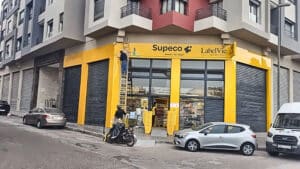
JYSK, the Danish-based home furnishing retailer, has opened its first two stores in Casablanca, Morocco. The opening not only establishes JYSK’s presence in Africa but also marks a significant milestone as the company expands into its 50th country.
JYSK Country Director, Igor Raić, talks to the Moroccan media
The two new stores are located in Viva Park and Aeria Mall. Another store is already planned for later this year, as JYSK continues to expand in the region.
“Expanding into Africa has been a long-term goal for JYSK, and today we are proud to make it a reality with our first stores in Casablanca,” said Rami Jensen, President & CEO at JYSK, during a launch event for local media and dignitaries.
“I look forward to seeing how JYSK grows in this exciting new market, and I am confident our great Scandinavian offers will resonate well with Moroccan customers.”
The brand’s first store opened in Aarhus, Denmark, in 1979 and since then it has grown to more than 31,000 employees and 3,500 stores.
Opening new stores in a new market
“It is always special to open new stores and even more special when it happens in new markets and on a new continent – as today,” added Jensen.
“Our expansion into Morocco is a confirmation of JYSK’s business model, which continues to be a success across all our markets.
“Just [three] weeks ago, we opened our first store in South America through our franchise setup, and now we are making our debut in Africa. JYSK is no stranger to expansion, but entering two new continents within a year is a remarkable milestone that opens even more opportunities for growth.”
In addition to the two physical stores, customers in Morocco can also shop online at a dark store (small warehouse).

Participants challenged to identify, articulate and commercialise the cultural assets that make their brand ready for a global audience.

Second outlet planned for Nairobi before year end, with Nigeria, South Africa and Morocco said to be future target markets.

Online search behaviour has changed significantly with the rise of AI. How can African brands adapt to this new marketing landscape?

Researchers propose a framework for packaging that senses, learns and acts – making packaging an active, AI-powered tool against food waste.

Country needs marketers to build recognition and consumer trust around Malawian products and national brand, says Deputy Minister.

Fashion brand suspends giant lingerie high above the city’s streets, using shadows to create a moving billboard for pedestrians and motorists.

Researchers describe AI influencers as having a ‘dual identity’. Consumers evaluate both ‘person’ and ‘technology’ identities at once.

Reputation and trust, once modest influences on hotel choice, have become some of the strongest predictors of patronage, study finds.

South African brands are increasingly setting the global benchmark for customer loyalty strategies, organisers say.

Global influences among younger consumers are still present, but they are being filtered through a distinctly Zambian lens.

Researchers find that lack of perceived ‘genuine care’ is the mechanism connecting AI involvement to lower trust ratings.