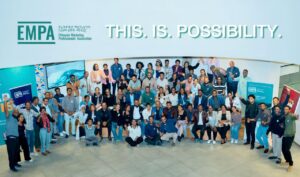
Marketing Society of Rwanda joins the African Marketing Confederation
Its aims include developing professional standards and creating opportunities for Rwandan marketers to learn and network.
GREENWASHING
By our African Marketing Confederation News Team | 2026
Generation Z consumers will construct a brand’s reputation, based on what it does or doesn’t do for the environment.
A study by Spanish academics has confirmed what marketers have suspected for years: If your organisation is engaged in greenwashing, Gen Z consumers are the ones most likely to care, to find out, and to and hold you accountable.
Members of Gen Z are especially sensitive to greenwashing and will shun companies that are not consistent with their message, concludes a study led by Elisenda Estanyol, a researcher at the Universitat Oberta de Catalunya (Open University of Catalonia). Researchers from Pompeu Fabra University, also in Spain, and Merco, a global leader in corporate reputation evaluation, also participated.
“The most striking thing is that Gen Z isn’t indifferent or complacent: they actively observe, assess and judge the companies’ behaviour in terms of the environment. They don’t just consume; they construct a brand’s reputation, based on what it does or doesn’t do for the environment,” says Estanyol, who is also Academic Director of the university master’s degree in Corporate Communication, Protocol and Events.
Photo: Artem Podrez from Pexels
“The study shows a generation that is especially sensitive to greenwashing and ready to hold companies accountable when they say one thing and do another.”
Not all companies start our equal
One of the key findings of the study is that, when it comes to sustainability, not all companies start from the same point.
The reputation and environmental commitment of organisations in socially stigmatised sectors – such as tobacco, gambling, fossil fuels or sugary drinks – are generally perceived more negatively. But these negative perceptions, like the positive ones, vary between countries and population groups.
This does not necessarily mean that companies in these countries are more, or less sustainable, but that social expectations may be different.
“In countries where environmental regulation is less strict or there is less institutional pressure, any visible effort is perceived as a significant advance,” explains Estanyol.
“[But] in Europe there is an increasingly demanding regulatory framework, which raises people’s expectations. Sustainability is no longer a bonus, it has become a minimum expected standard, which explains a more critical and less forgiving public attitude to corporate behaviour.”
Besides location, another factor that makes a difference is gender. In all the countries and generations analysed in the study, women tend to value environmental commitment and corporate reputation more highly than men. This highlights the importance of incorporating a gender perspective in the analysis of corporate social responsibility.
Gen Z is demanding, but also recognises effort
The results of the study confirm that Gen Z is more critical, demanding and active than previous generations. The data, however, suggest certain nuances.
Far from showing a systematic distrust of companies, Gen Z values environmental commitment and corporate reputation most positively, especially when they perceive this commitment as credible and consistent. In other words, members of this generation are demanding, but they are also able to recognise companies which display hard work and real commitment.
This behaviour points to a key characteristic: Generation Z acts not so much from distrust as from discernment. Their expectations are high, but not indiscriminate. They expect transparency, consistency between discourse and practice, and measurable results. When these conditions are met, the response is positive.
“The message for companies is clear: Gen Z is watching and will not forgive inconsistency. Companies that incorporate sustainability in a real and verifiable way can gain reputation and legitimacy; those that merely feign commitment risk losing credibility,” Estanyol notes.
You can find out more about the study here.

Its aims include developing professional standards and creating opportunities for Rwandan marketers to learn and network.

Latest campaign aims to boost international arrivals while highlighting tourism’s contribution to South Africa’s economy and job creation.

Fast-growing middle class and promotion of electric vehicle adoption presents ‘substantial growth opportunities’ for Chinese brand.

Week of activities and events creates opportunities for networking, knowledge sharing and hearing insights from industry experts.

Research suggests that attention-grabbing campaigns may need to be paired with memorable visual design to influence buying decisions.

Cape Town’s port must be a competitive advantage rather than a bottleneck that constrains trade, investment and supply chains.

Experienced retail executive Ricardo Valente Da Conceicao returns to Africa as GM, bringing expertise gained in various overseas markets.

Local consumers are proving receptive to BIM’s private-label goods and hard-discount model as they struggle with inflationary pressure.

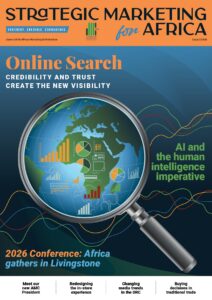
Issue 1 2026 of Strategic Marketing for Africa, the magazine for deep-thinking African marketing professionals, highlights key trends.

Rwanda’s tourism marketing arm signs agreement to be the English club’s main shirt sponsor after deal with Arsenal FC ends.

For too long, the PR landscape has had no shared standard for who practises in it or what responsibility they carry, founders say.