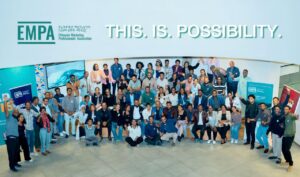
Pre-conference masterclass discusses taking African brands to the world
Participants challenged to identify, articulate and commercialise the cultural assets that make their brand ready for a global audience.
A.M.C. MEMBER NEWS
By our African Marketing Confederation News Team | 2026
Partnership aims to produce a new generation of globally competitive marketing professionals in Ghana.
The University of Professional Studies, Accra (UPSA), in partnership with the Chartered Institute of Marketing, Ghana (CIMG), has officially launched a Bachelor of Science (BSc) in Applied Marketing programme, the first of its kind in the sub-region to integrate an academic degree with a direct pathway to professional marketing qualification.
Image by Vecstock on Freepik
The programme enables students to earn a UPSA degree while simultaneously meeting requirements for the CIMG Professional Marketing Qualifications (PMQ). Graduates will automatically qualify for the Professional Diploma in Marketing under CIMG, positioning them as ‘Chartered Marketers in the making’ and ready for immediate industry impact.
Approximately 40% of the course load is aligned with CIMG professional papers, ensuring that academic instruction is closely integrated with industry standards. The curriculum focuses on emerging and high-demand areas including Artificial Intelligence in Marketing, Marketing Metrics, Ethics and Sustainability Marketing, and Strategic Brand Management.
The initiative was conceptualised under the tenure of immediate past CIMG National President, Dr Daniel Kasser Tee, whose vision promoted stronger integration between academia and professional practice.
The current CIMG National President, Mr Michael Abbiw, described the programme as a major step forward in Ghana’s education landscape, noting that it bridges the gap between theory and professional mastery while creating a pipeline of ethical, innovative marketing leaders.
Embedded professional content
CIMG Chief Examiner, Dr Francis Mensah Sasraku, emphasised the strategic curriculum alignment, stating that graduates will be automatically eligible for CIMG’s Professional Diploma in Marketing due to the embedded professional content.
UPSA Vice-Chancellor, Professor John Kwaku Mensah Mawutor, reaffirmed that the programme aligns with the university’s statutory mandate to deliver both academic and professional education, equipping students with a comprehensive understanding of marketing within a broader business context.
The programme has received formal approval from the Ghana Tertiary Education Commission (GTEC), endorsing it as a forward-looking model that strengthens collaboration between academia and industry to meet evolving labour market demands.
Through CIMG’s partnerships with the African Marketing Confederation and the Chartered Institute of Marketing (CIM-UK), qualifications earned under the programme will carry international recognition, enhancing graduates’ global competitiveness.
“The launch reinforces UPSA’s leadership in professional education and strengthens CIMG’s mandate to regulate and promote marketing practice in Ghana, producing a new generation of globally competitive marketing professionals,” the two organisations say in a statement.

Participants challenged to identify, articulate and commercialise the cultural assets that make their brand ready for a global audience.

Second outlet planned for Nairobi before year end, with Nigeria, South Africa and Morocco said to be future target markets.

Online search behaviour has changed significantly with the rise of AI. How can African brands adapt to this new marketing landscape?

Researchers propose a framework for packaging that senses, learns and acts – making packaging an active, AI-powered tool against food waste.

Country needs marketers to build recognition and consumer trust around Malawian products and national brand, says Deputy Minister.

Fashion brand suspends giant lingerie high above the city’s streets, using shadows to create a moving billboard for pedestrians and motorists.

Researchers describe AI influencers as having a ‘dual identity’. Consumers evaluate both ‘person’ and ‘technology’ identities at once.

Reputation and trust, once modest influences on hotel choice, have become some of the strongest predictors of patronage, study finds.

South African brands are increasingly setting the global benchmark for customer loyalty strategies, organisers say.

Global influences among younger consumers are still present, but they are being filtered through a distinctly Zambian lens.

Researchers find that lack of perceived ‘genuine care’ is the mechanism connecting AI involvement to lower trust ratings.