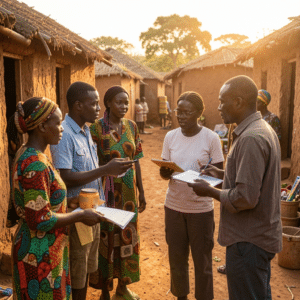
Pre-conference masterclass discusses taking African brands to the world
Participants challenged to identify, articulate and commercialise the cultural assets that make their brand ready for a global audience.
TOURISM & HOSPITALITY
By our African Marketing Confederation News Team | 2025
Brand expects to open more than 100 new properties to complement its existing operations, including debuts in Angola and Benin.
The global Hilton hotel chain has announced plans to almost triple its presence in Africa to more than 160 hotels in the coming years.
An artist’s impression of the new Hilton Luanda Hotel Godinho. Illustration: Hilton
It expects to open over 100 new properties to complement its existing presence on the continent, as well as create approximately 18,000 jobs in what it describes as “Africa’s burgeoning hospitality sector”.
“We are thrilled to announce several new hotel agreements which significantly expand our footprint in Africa, a continent brimming with potential and opportunity,” says Carlos Khneisser, Chief Development Officer for the Middle East and Africa at Hilton.
“Africa offers incredible opportunity – from thriving business hubs to vibrant cultures, wildlife and natural landscapes. We are excited to unveil a host of new destinations building on Hilton’s legacy of hospitality across Africa for over 65 years.”
Prominent in Hilton’s newly announced Africa strategy is Angola, where the company is making its debut.
It has concluded agreements for three properties – two in the capital city of Luanda under its flagship Hilton Hotels & Resorts brand, and affordable but still upscale Hilton Garden Inn brand, as well as a property in Cabinda under its DoubleTree by Hilton brand.
The Hilton Luanda Hotel Godinho is being developed in partnership with Servicab S.A. and is expected to open in 2027. It will feature 220 guest rooms and suites, stretched along an 11,250-square-metre beachfront with views of the ocean. The property will also have multiple dining options and over 1,000 square metres of event space.
Still in the capital city, Hilton Garden Inn Luanda Airport is being developed in partnership with Crestigo and is set to open in 2028. It will feature 200 guest rooms, a dining restaurant and terrace, meeting rooms, fitness centre, pool and rooftop bar.
“The hotel’s proximity to Antonio Agostinho Neto International Airport and corporate business hubs makes it an ideal choice for business travellers,” comments Hilton in a press release.
In Cabinda, a city located about 380km from Luanda on the West coast of Africa, DoubleTree by Hilton Cabinda Futila Residences is being developed under an agreement with Prodoil S.A. and is expected to open in 2026.
It will offer 290 apartments and 10 three-bedroom oceanfront villas. It will also feature a restaurant, a swimming pool and a natural lake.
Brand will also debut in Benin
Meanwhile, Hilton is also making its debut as a brand in Benin, West Africa. Scheduled to open in 2028, the Hilton Cotonou will be strategically located on the Boulevard de la Marina, next to the Congress Palace, key government offices and several embassies.
According to the company, the new property will “enhance Benin’s capacity to host international conferences and events, reinforcing the country’s ambition to become an African hub for business and high-end tourism”.
The African Marketing Confederation is launching an AMC Tourism Chapter during its Marketing Conference 2025, which is scheduled to take place in Accra, Ghana in August. This forms part of a collaboration with the Brand Africa initiative by UN Tourism.

Participants challenged to identify, articulate and commercialise the cultural assets that make their brand ready for a global audience.

Second outlet planned for Nairobi before year end, with Nigeria, South Africa and Morocco said to be future target markets.

Online search behaviour has changed significantly with the rise of AI. How can African brands adapt to this new marketing landscape?

Researchers propose a framework for packaging that senses, learns and acts – making packaging an active, AI-powered tool against food waste.

Country needs marketers to build recognition and consumer trust around Malawian products and national brand, says Deputy Minister.

Fashion brand suspends giant lingerie high above the city’s streets, using shadows to create a moving billboard for pedestrians and motorists.

Researchers describe AI influencers as having a ‘dual identity’. Consumers evaluate both ‘person’ and ‘technology’ identities at once.

Reputation and trust, once modest influences on hotel choice, have become some of the strongest predictors of patronage, study finds.

South African brands are increasingly setting the global benchmark for customer loyalty strategies, organisers say.

Global influences among younger consumers are still present, but they are being filtered through a distinctly Zambian lens.

Researchers find that lack of perceived ‘genuine care’ is the mechanism connecting AI involvement to lower trust ratings.