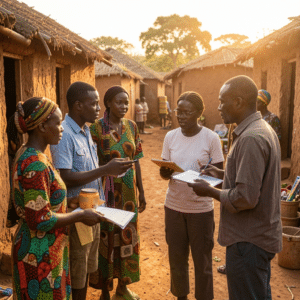
Pre-conference masterclass discusses taking African brands to the world
Participants challenged to identify, articulate and commercialise the cultural assets that make their brand ready for a global audience.
INTERNATIONAL TRADE
By our News Team | 2023
While the likes of Kenya and South Africa suffer setbacks, Tanzania is showing impressive growth, says e-commerce entrepreneur.
Tanzania’s stable governance, coupled with its rapid economic and population expansion, firmly positions the nation to become a pan-African trading superstar, according to Daniel Yu, the founder and CEO of Wasoko, which is claimed to be Africa’s largest B2B e-commerce network.
In an opinion article for the Tanzanian-based newspaper, The Citizen, Yu says the country can surpass the likes of Kenya and South Africa, both of which are currently facing significant economic and political setbacks.
Dar es Salaam is the most populous city in Tanzania. Photo by Dicksonpicha via Wikipedia
With more neighbouring countries and a larger population than any other African nation along the Indian Ocean, Tanzania is well-positioned to extend its influence even further, he believes.
“Projections indicate Tanzania’s population will increase by over double to 135-million people by 2050,” Yu states.
“While rapid population growth can pose significant challenges, Tanzania’s impressive GDP per capita growth of over 40 percent in the past decade suggests it is managing to grow overall worker productivity.
“In contrast, countries like Nigeria have experienced high population growth rates but witnessed GDP per capita decline by 30 percent over the same period.”
To be a superstar, bold steps are needed
However, for Tanzania to achieve its Pan-African superstar status, it must take bold steps, Yu emphasises.
For example, recognising the substantial gains Tanzania stands to generate in supplying its eight neighbouring countries, it should lead in advocating for, and implementing, the Africa Continental Free Trade Agreement (AfCFTA).
Importantly, the country should follow through on implementing the African Union Protocol on Free Movement of Persons, which it signed in 2018.
This grants African citizens visa-free entry to all African countries, equal employment opportunities without discrimination, and the right to long-term residence in any African country.
“While this might sound wildly ambitious and unrealistic, the European Union provides a tangible example,” he says.
“If Tanzania led the implementation of the protocol, it could rapidly attract exceptional talent from across Africa to boost local firms, while generating significantly more jobs for its own citizens.”
He concludes: “With the right strategies in place, Tanzania can pave the way for a prosperous future, positioning itself as a dynamic force driving the economic and social transformation of the entire Global South.”
You can read the full article here.

Participants challenged to identify, articulate and commercialise the cultural assets that make their brand ready for a global audience.

Second outlet planned for Nairobi before year end, with Nigeria, South Africa and Morocco said to be future target markets.

Online search behaviour has changed significantly with the rise of AI. How can African brands adapt to this new marketing landscape?

Researchers propose a framework for packaging that senses, learns and acts – making packaging an active, AI-powered tool against food waste.

Country needs marketers to build recognition and consumer trust around Malawian products and national brand, says Deputy Minister.

Fashion brand suspends giant lingerie high above the city’s streets, using shadows to create a moving billboard for pedestrians and motorists.

Researchers describe AI influencers as having a ‘dual identity’. Consumers evaluate both ‘person’ and ‘technology’ identities at once.

Reputation and trust, once modest influences on hotel choice, have become some of the strongest predictors of patronage, study finds.

South African brands are increasingly setting the global benchmark for customer loyalty strategies, organisers say.

Global influences among younger consumers are still present, but they are being filtered through a distinctly Zambian lens.

Researchers find that lack of perceived ‘genuine care’ is the mechanism connecting AI involvement to lower trust ratings.