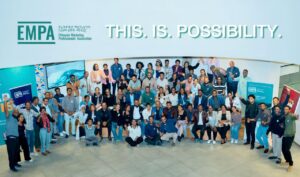
Pre-conference masterclass discusses taking African brands to the world
Participants challenged to identify, articulate and commercialise the cultural assets that make their brand ready for a global audience.
REMOTE WORKING
By our News Team | 2021
The world has got used to remote working, but do creative agencies have the best solutions in place to manage it?
If marketing and creative agencies are going to have staff working remotely – with all the benefits that brings – do they have the best solutions in place to expand their own businesses?
In March last year, companies suddenly found that working from home had gone from being a perk to a necessity. And within an average of 11 days (according to consulting firm McKinsey), they’d put new processes and systems in place to make it happen. So, the question becomes whether the solutions adopted in the pandemic will still be fit for purpose afterwards?
Hybrid: Photo by HubSport blog
Remote working at an agency
This situation is particularly challenging for creative agencies, because so much of what they do relies on collaboration within and across teams. This is exacerbated among smaller agencies by the tendency for them to be operating siloed management systems for different areas of activity: project management, collaboration, finances and CRM (customer relationship management), for example.
These are the problems enterprise software company Silversoft aims to address within the agency space. With success in the South African advertising industry, Silversoft has now expanded into the UK.
“A small agency can run on Google Sheets or Excel with an appropriate accounting system. But when that team starts to scale, there is an inherent need for a strong time-tracking solution, and often another separate solution for managing resources. This is often bolstered by further solutions for managing clients, projects, tasks and deliverables,” says Iain Ravenhill, sales director, UK and Europe at Silversoft.
“By the time the agency is 20-plus people [strong], it’s not uncommon to see a myriad of platforms strung together to create visibility of their work.
“If C-level executives now understand that they can trust their staff to work remotely, then we provide them with a platform. This platform helps them maintain control of their business while giving their team the creative latitude to do what they do best in the way that suits them best,” Ravenhill explains.
Source: The Drum

Participants challenged to identify, articulate and commercialise the cultural assets that make their brand ready for a global audience.

Second outlet planned for Nairobi before year end, with Nigeria, South Africa and Morocco said to be future target markets.

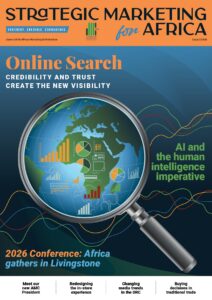
Online search behaviour has changed significantly with the rise of AI. How can African brands adapt to this new marketing landscape?

Researchers propose a framework for packaging that senses, learns and acts – making packaging an active, AI-powered tool against food waste.

Country needs marketers to build recognition and consumer trust around Malawian products and national brand, says Deputy Minister.

Fashion brand suspends giant lingerie high above the city’s streets, using shadows to create a moving billboard for pedestrians and motorists.

Researchers describe AI influencers as having a ‘dual identity’. Consumers evaluate both ‘person’ and ‘technology’ identities at once.

Reputation and trust, once modest influences on hotel choice, have become some of the strongest predictors of patronage, study finds.

South African brands are increasingly setting the global benchmark for customer loyalty strategies, organisers say.

Global influences among younger consumers are still present, but they are being filtered through a distinctly Zambian lens.

Researchers find that lack of perceived ‘genuine care’ is the mechanism connecting AI involvement to lower trust ratings.