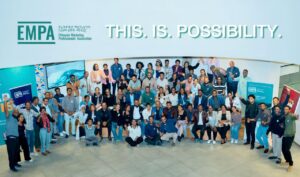
Pre-conference masterclass discusses taking African brands to the world
Participants challenged to identify, articulate and commercialise the cultural assets that make their brand ready for a global audience.
MARKET RESEARCH
By our News Team | 2023
Company has bought Omedia, which provides research-related services in the French-speaking markets of Senegal, Mali and Ivory Coast.
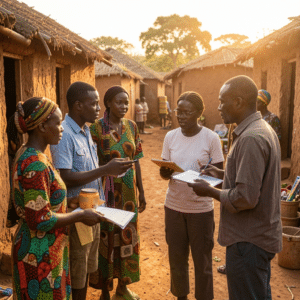
Global market research firm Ipsos has acquired Omedia, a multi-specialist research company operating in Senegal, Mali and Ivory Coast. The cost of the deal has not been disclosed.
By investing in Omedia, Ipsos plans to enhance its business in French-speaking sub-Saharan Africa and says it will “leverage robust operational capabilities” in the region.
Photo courtesy of Pix4free
Omedia provides marketing research surveys, audience measurement, advertising, editorial and digital monitoring across West Africa and was previously owned by French media audience measurement company Mediametrie.
“The acquisition of Omedia is a great opportunity to offer more services to our clients in countries where we had limited capacities so far. We are happy to welcome more great professionals which will help our development in Africa,” says Ben Page, Ipsos CEO.
Omedia will continue to be Mediametrie’s partner of choice
Adds Yannick Carriou, Chairman and CEO of Médiamétrie: “I am delighted that Omedia is joining the Ipsos Group. The team will discover how dynamic and innovative Ipsos is. As Omedia will continue to be Mediametrie’s partner of choice in the region, all our clients will benefit from even stronger capabilities.”
Ipsos is one of the largest market research and polling companies globally, operating in 90 markets and employing nearly 20,000 people. Founded in France in 1975, it has a strong presence in Africa.
Earlier this month it also announced the acquisition of Big Village Australia, which offers public-sector market research, employee research and customer experience research services in the Australia-New Zealand region.

Participants challenged to identify, articulate and commercialise the cultural assets that make their brand ready for a global audience.

Second outlet planned for Nairobi before year end, with Nigeria, South Africa and Morocco said to be future target markets.

Online search behaviour has changed significantly with the rise of AI. How can African brands adapt to this new marketing landscape?

Researchers propose a framework for packaging that senses, learns and acts – making packaging an active, AI-powered tool against food waste.

Country needs marketers to build recognition and consumer trust around Malawian products and national brand, says Deputy Minister.

Fashion brand suspends giant lingerie high above the city’s streets, using shadows to create a moving billboard for pedestrians and motorists.

Researchers describe AI influencers as having a ‘dual identity’. Consumers evaluate both ‘person’ and ‘technology’ identities at once.

Reputation and trust, once modest influences on hotel choice, have become some of the strongest predictors of patronage, study finds.

South African brands are increasingly setting the global benchmark for customer loyalty strategies, organisers say.

Global influences among younger consumers are still present, but they are being filtered through a distinctly Zambian lens.

Researchers find that lack of perceived ‘genuine care’ is the mechanism connecting AI involvement to lower trust ratings.