Changan auto brand enters Ethiopian market with first dealership
Fast-growing middle class and promotion of electric vehicle adoption presents ‘substantial growth opportunities’ for Chinese brand.
MARKETING ETHICS
By our News Team | 2022
Company says it recognises that younger children are increasingly exposed to online promotional content from a broad range of industries.
Global FMCG giant Unilever – which includes brands such as Ola, Magnum and Cornetto ice cream in its stable – has announced that it will stop marketing its food and beverage products to children under 16.
The change, which is applicable to all international markets, comes into effect from 1 January next year.
“In our connected world, children learn online,” the company said in a statement released yesterday (Thursday).
“At 12–13 years of age, on average, a child gets their first smartphone. From 13, they can enter the world of social media, creating their own content and engaging with and following influencers on platforms such as Instagram, TikTok, YouTube or Facebook.
Photo by Cleyder Duque from Pexels
“We understand that children are increasingly exposed to online promotional content from a broad range of industries. So … Unilever will stop marketing and advertising food and beverages to children under the age of 16 years old across both traditional media and social media channels.”
Relevant local laws and standards will also be met
The statement added that Unilever’s marketing and point-of-sale communications would also comply with all relevant country laws and regulations as well as self-regulatory codes.
“In some markets – including, for example, the UK and Portugal – existing codes and laws mean that these new principles are already either partially met, fully met or exceeded. But for most countries across the globe this is a major step forward.”
The company’s new key principles for responsible marketing to children are as follows:
“We believe that people deserve a treat from time to time,” said Matt Close, Unilever’s President of Ice Cream. “We are committed to market these treats responsibly. That means we need to recognise the power of social media and influencer marketing on children’s choices – and address it.”

Fast-growing middle class and promotion of electric vehicle adoption presents ‘substantial growth opportunities’ for Chinese brand.

Week of activities and events creates opportunities for networking, knowledge sharing and hearing insights from industry experts.

Research suggests that attention-grabbing campaigns may need to be paired with memorable visual design to influence buying decisions.

Cape Town’s port must be a competitive advantage rather than a bottleneck that constrains trade, investment and supply chains.

Experienced retail executive Ricardo Valente Da Conceicao returns to Africa as GM, bringing expertise gained in various overseas markets.

Local consumers are proving receptive to BIM’s private-label goods and hard-discount model as they struggle with inflationary pressure.

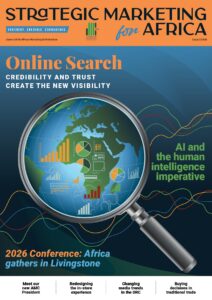
Issue 1 2026 of Strategic Marketing for Africa, the magazine for deep-thinking African marketing professionals, highlights key trends.

Rwanda’s tourism marketing arm signs agreement to be the English club’s main shirt sponsor after deal with Arsenal FC ends.

For too long, the PR landscape has had no shared standard for who practises in it or what responsibility they carry, founders say.

By carefully selecting followers to engage with an influencer’s post, marketers can significantly increase the post’s spread.

SA’s Advertising Regulatory Board finds Kia advertisement could be offensive to people with certain health disorders.