Pre-conference masterclass discusses taking African brands to the world
Participants challenged to identify, articulate and commercialise the cultural assets that make their brand ready for a global audience.
BUSINESS STRATEGY
By our African Marketing Confederation News Team | 2025
A new production line near Nairobi will produce the Orbit chewing gum brand for SSA and the Extra brand for Arabic-speaking markets.
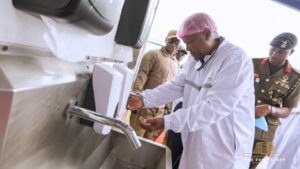
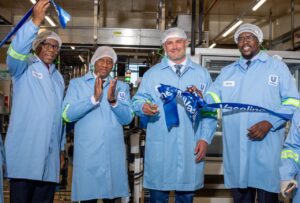
Mars Wrigley Kenya has marked a significant expansion of its operations in the country by officially opening a new sugar-free gum production line at its Athi River facility, about 30km outside Nairobi.
Photo: Mars Wrigley
Mars Wrigley, which is the snacking division of global FMCG giant Mars Incorporated, has already committed over US$70-million to the East African country and is investing another $33-million over the next three years.
The new line will produce the Orbit brand for sub-Saharan Africa and the Extra brand for Arabic-speaking markets – including Egypt, Saudi Arabia and the wider Gulf region.
This move to local production means the Kenyan business will no longer rely on a factory in Poland which previously produced all the sugar-free gum for the region. According to Mars Wrigley Kenya, the new will reduce lead times, strengthen supply chain resilience and cut dependency on European imports.
Confidence in the potential of Kenya
Speaking at the unveiling, Ismael Bello, General Manager for Mars Wrigley in sub-Saharan Africa, said the move demonstrates the company’s confidence in Kenya’s potential as a regional manufacturing hub.
“This investment strengthens our ability to deliver high-quality, affordable products while supporting job creation and Kenya’s export growth,” Bello said.
Added Plant Director Mustaffa Bin Kamaludin, “Our new sugar-free gum line incorporates advanced technology that enhances operational efficiency and sustainability performance. More importantly, it underscores our commitment to developing local talent and positioning of Kenya as a centre of excellence in confectionery manufacturing.”
The company’s expansion in Kenya forms part of its broader strategy to localise production and reinforce regional supply networks. It currently supports over 3,500 direct and indirect jobs in Kenya.
You can watch a video news report about the opening here.

Participants challenged to identify, articulate and commercialise the cultural assets that make their brand ready for a global audience.

Second outlet planned for Nairobi before year end, with Nigeria, South Africa and Morocco said to be future target markets.

Online search behaviour has changed significantly with the rise of AI. How can African brands adapt to this new marketing landscape?

Researchers propose a framework for packaging that senses, learns and acts – making packaging an active, AI-powered tool against food waste.

Country needs marketers to build recognition and consumer trust around Malawian products and national brand, says Deputy Minister.

Fashion brand suspends giant lingerie high above the city’s streets, using shadows to create a moving billboard for pedestrians and motorists.

Researchers describe AI influencers as having a ‘dual identity’. Consumers evaluate both ‘person’ and ‘technology’ identities at once.

Reputation and trust, once modest influences on hotel choice, have become some of the strongest predictors of patronage, study finds.

South African brands are increasingly setting the global benchmark for customer loyalty strategies, organisers say.

Global influences among younger consumers are still present, but they are being filtered through a distinctly Zambian lens.

Researchers find that lack of perceived ‘genuine care’ is the mechanism connecting AI involvement to lower trust ratings.