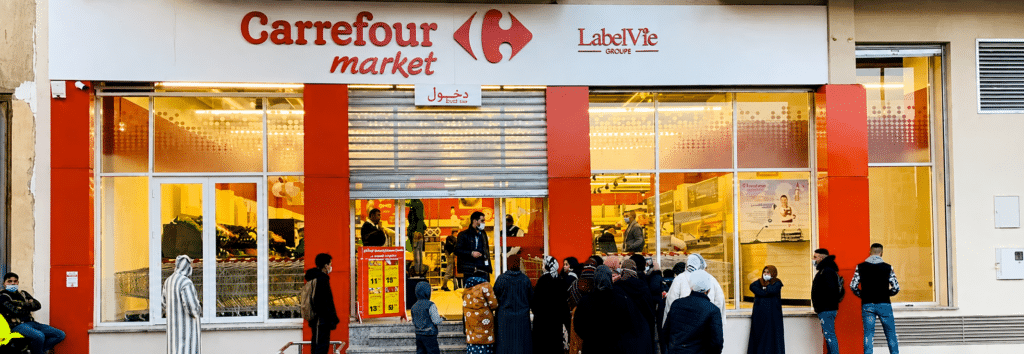
The retail group – which offers everything from large hypermarkets to neighbourhood convenience stores operating under brands such as Carrefour, Atacadão and Supeco – expects sales to grow by about 15% in 2026 and plans more store openings.
In April, the group opened a new Atacadão hyper-cash store in Khénifra, a picturesque city in central Morocco which nestles in the foothills of the Middle Atlas Mountains. This brings the Khénifra chain to 24 locations nationwide and shows a stronger push into regional cities.
According to a media report by 7 News Morocco, profit is also a priority. LabelVie is targeting an EBITDA margin (operational profitability as a percentage of its total revenue) close to 9.3% and has launched a solar energy programme to help cut long-term costs.
The group’s 2026 plans follow a strong 2025, when revenue rose 12.9% to 18.5bn dirhams (approximately US$5.04-billion).
LabelVie operates more than 400 stores across 37 cities in the country, employing over 10,000 people. In early May 2026, LabelVie and Retail Holding announced a merger that, according to 7 News Morocco, “redrafts the competitive map of Morocco’s retail distribution sector”.
Retail Holding, which was LabelVie’s controlling shareholder, operates franchise brands such as Kiabi, Burger King, Brands & Co, and Ansamble. It also has the King Cash supermarket and retail chain brand in Côte d’Ivoire.
Traditional corner shops under increasing pressure
While Morocco’s grocery retail sector is increasingly competitive and contested by several international supermarket brands, their presence and economic muscle is not always popular.
Morocco World News reported in December 2025 that, for years, the small neighbourhood grocers who anchor every street corner have been losing ground as the major chains multiply across cities and villages alike.
“The country’s traditional retail backbone is being squeezed to near-breaking point,” the digital news publication said.
“In many neighbourhoods today, it’s no longer unusual to find two or even three small supermarkets within the same few blocks, drawing customers away from the local shops that long served as the country’s social and economic safety net.
“For thousands of families – especially those who rely on the ‘karni’, the month-end credit system small grocers have maintained for generations – the disappearance of these shops would be a socio-economic rupture.”