Pre-conference masterclass discusses taking African brands to the world
Participants challenged to identify, articulate and commercialise the cultural assets that make their brand ready for a global audience.
PUBLIC RELATIONS
By our African Marketing Confederation News Team | 2026
AI-powered tools giving PR teams concrete ways to improve operational efficiency and gain the insight needed to measure brand performance.
Ninety percent of PR teams globally are integrating generative AI into their workflows, according to the annual State of PR Report released by social and consumer intelligence company Meltwater.
Photo: Werner Pfennig from Pexels
The technology is being used for tasks such as drafting press releases, optimising content and brainstorming. However, only 13% of respondents to the study say it’s highly integrated into their operations.
Public relations professionals said identifying emerging trends and issues, and summarisation of media coverage, are the two areas where AI can have the biggest impact on their efforts.
The 2026 State of PR Report, produced by Meltwater in partnership with global communications agency We Communications, highlights how PR teams are navigating rising expectations, evolving measurement demands, and using AI as a strategic advantage – while increasingly positioning themselves as strategic drivers of business value.
Among the other key takeaways from this year’s report:
“The world of PR is defined by constant change, yet our research shows that core challenges, specifically proving ROI and fighting a persistent lack of resources, remain front and centre,” says John Box, CEO at Meltwater.
“What’s different now is that AI-powered tools are giving teams concrete ways to improve operational efficiency, gain the insight needed to measure brand performance and ensure the PR function achieves recognition and investment it deserves.”
Adds Melissa Waggener Zorkin, Global CEO of We Communications: “PR pros do a great job measuring activity, but we’re seeing a missed opportunity when it comes to measuring impact. We now have sophisticated AI solutions that connect communications to reputation and business value in clear, quantifiable ways, giving communicators the data they need to show organisation leaders how their work drives real results.”
You can access the full report here.

Participants challenged to identify, articulate and commercialise the cultural assets that make their brand ready for a global audience.

Second outlet planned for Nairobi before year end, with Nigeria, South Africa and Morocco said to be future target markets.

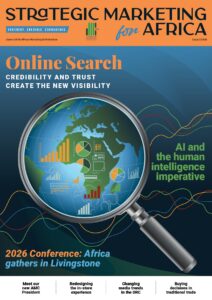
Online search behaviour has changed significantly with the rise of AI. How can African brands adapt to this new marketing landscape?

Researchers propose a framework for packaging that senses, learns and acts – making packaging an active, AI-powered tool against food waste.

Country needs marketers to build recognition and consumer trust around Malawian products and national brand, says Deputy Minister.

Fashion brand suspends giant lingerie high above the city’s streets, using shadows to create a moving billboard for pedestrians and motorists.

Researchers describe AI influencers as having a ‘dual identity’. Consumers evaluate both ‘person’ and ‘technology’ identities at once.

Reputation and trust, once modest influences on hotel choice, have become some of the strongest predictors of patronage, study finds.

South African brands are increasingly setting the global benchmark for customer loyalty strategies, organisers say.

Global influences among younger consumers are still present, but they are being filtered through a distinctly Zambian lens.

Researchers find that lack of perceived ‘genuine care’ is the mechanism connecting AI involvement to lower trust ratings.