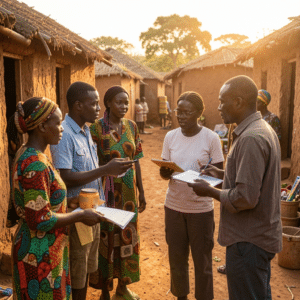
Landmark gathering gets underway with delegates from over 30 countries
Opening plenary hears that securing Africa’s economic future requires businesses to discover new customers and cross-border opportunities.
EXECUTIVE APPOINTMENTS
By our African Marketing Confederation News Team | 2026
Omotosho has wide African experience within the MultiChoice business and succeeds John Ugbe, who has retired.
MultiChoice Nigeria has appointed Kemi Omotosho as its new Chief Executive Officer following the retirement of John Ugbe. The transition is effective from January 2026.
Ugbe has stepped down after nearly 15 years at the helm of MultiChoice Nigeria. During this time, he led the business through major changes within the industry and market landscape – including shifts in consumer behaviour, technology and regulation within the pay-TV and broader media industry.
Kemi Omotosho
According to the company, Ugbe’s exit is a planned retirement rather than a sudden departure. The transition is a structured succession process designed to ensure continuity in leadership and operations.
Omotosho brings significant expertise
With over 20 years of experience in media, telecommunications and digital services in Nigeria and sub-Saharan Africa, Omotosho brings significant expertise to the role.
She has previously held various senior roles within the MultiChoice Group, including Executive Head of Customer Value Management in Nigeria and Group Executive Head of Customer Value Management for the wider African region.
Most recently, she served as Regional Director for Southern Africa, overseeing operations across seven countries.
In her new role, Omotosho will oversee MultiChoice Nigeria’s strategy, day-to-day operations and engagement with regulators, partners and other stakeholders.
Speaking on her appointment, Omotosho said: “It is a privilege to be entrusted with the leadership of MultiChoice Nigeria at this important moment.
“Nigeria remains one of the group’s most strategic and dynamic markets. I look forward to working with our teams and partners to deepen our relationship with consumers, champion local storytelling and the creative economy, as well as build a future-ready organisation that delivers sustainable value.”

Opening plenary hears that securing Africa’s economic future requires businesses to discover new customers and cross-border opportunities.

Participants challenged to identify, articulate and commercialise the cultural assets that make their brand ready for a global audience.

Second outlet planned for Nairobi before year end, with Nigeria, South Africa and Morocco said to be future target markets.

Online search behaviour has changed significantly with the rise of AI. How can African brands adapt to this new marketing landscape?

Researchers propose a framework for packaging that senses, learns and acts – making packaging an active, AI-powered tool against food waste.

Country needs marketers to build recognition and consumer trust around Malawian products and national brand, says Deputy Minister.

Fashion brand suspends giant lingerie high above the city’s streets, using shadows to create a moving billboard for pedestrians and motorists.

Researchers describe AI influencers as having a ‘dual identity’. Consumers evaluate both ‘person’ and ‘technology’ identities at once.

Reputation and trust, once modest influences on hotel choice, have become some of the strongest predictors of patronage, study finds.

South African brands are increasingly setting the global benchmark for customer loyalty strategies, organisers say.

Global influences among younger consumers are still present, but they are being filtered through a distinctly Zambian lens.