The Economist, the influential London-based international affairs weekly publication, has again turned its attention to Africa – this time to examine the continent’s rapid urbanisation and how a new middle class is putting down roots in the suburbs of major cities.
To probe how African cities have changed over the past decade, the publication used WorldPop, an open-source provider of spatial and demographic data. It also examined forecasts from Africapolis, an initiative of the Sahel and West Africa Club,
Among the findings is that Africa, which is already quite urban, is urbanising faster than any other part of the world. By 2050 the number of African megacities (those with at least 10-million people) will rise from three to 17, the second-most of any continent.
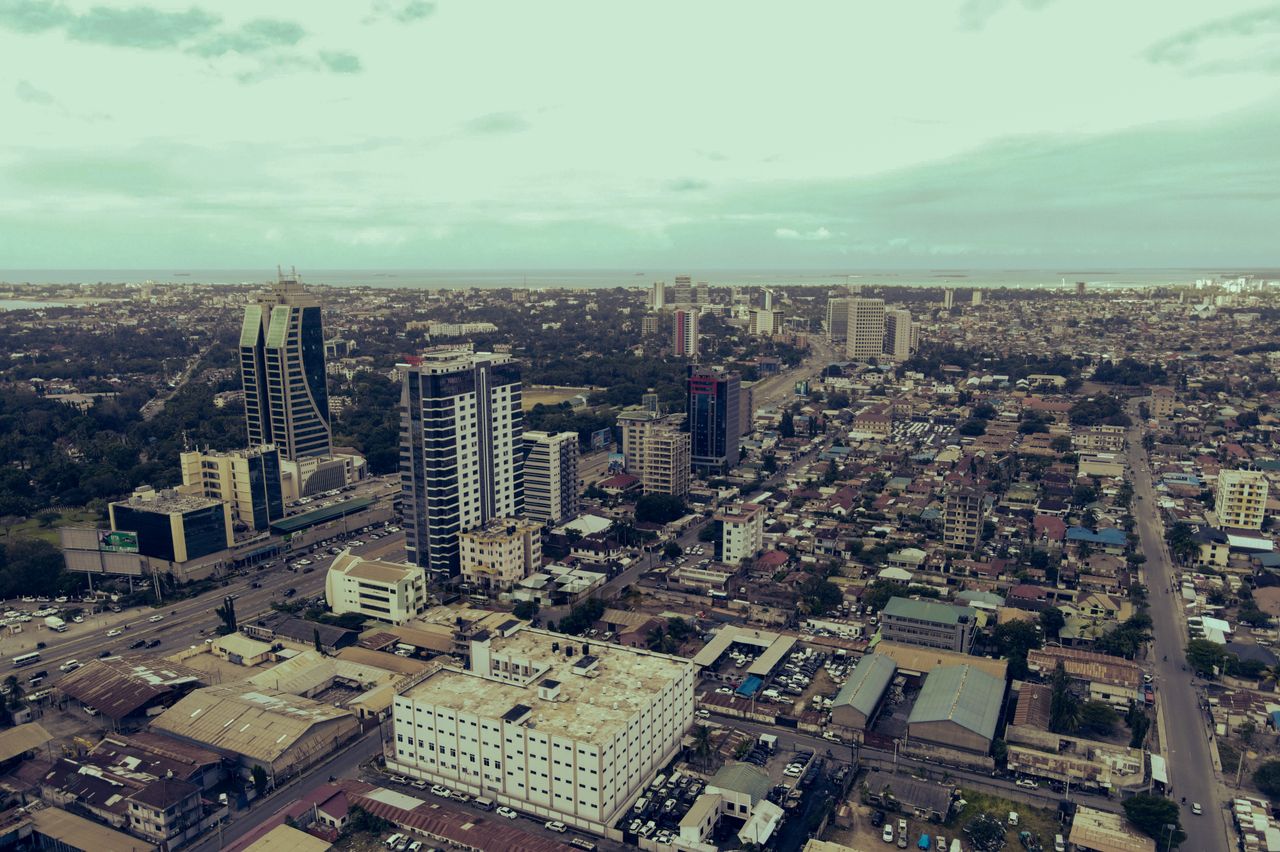
The megacities will include Dar es Salaam in Tanzania, whose population will more than double from 6.9-million to 15.6-million.
In Dar es Salaam, the suburban population has grown by 54% in the past decade, faster than the average rate in suburbs across Africa, The Economist reports, noting that “it is on the fringes [of cities] where the African middle class is being made”.
Other fast-growing suburbs include those of Dakar, Senegal’s capital; Kumasi, Ghana’s second city; Hawassa in Ethiopia; and Kano in northern Nigeria.
Expanding ever farther outward
“African cities are set to expand ever farther outward,” the article states. “A forthcoming World Bank report projects that from 2025 to 2050 the physical area of cities in sub-Saharan Africa will grow by 90%, slightly faster than the expected 85% growth of their populations.
“This may be an underestimate. Urban scholars use a rule of thumb, based on historical trends in developing countries, that when a city’s population doubles, the area it occupies triples.”
Over the next 25 years urban Africa will more or less double its footprint, adding 275,000 square kilometres, according to Africapolis – the equivalent of more than 4,000 Manhattans or almost 400 Singapores.
“Thousands of new towns and cities will pop up; many will be like tiny stars in galaxies of mega-agglomerations such as Dar es Salaam, Lagos and Nairobi. This should be a boon for Africa. Bigger cities means bigger markets, a greater density of talent and broader tax bases,” The Economist states.
You can read the full article here (free sign-up required).