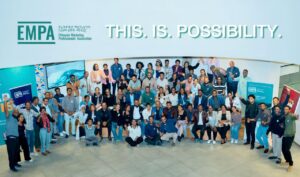
Landmark gathering gets underway with delegates from over 30 countries
Opening plenary hears that securing Africa’s economic future requires businesses to discover new customers and cross-border opportunities.
The deal includes advertising at track side, a FanZone activation at races, tickets and hospitality experiences, exclusive marketing rights for the featured brands, exclusive track pouring, and product supply rights.
There is also an official partnership with F1 Sprint, a short version of F1 that covers about 100km and has no pit stops, and an involvement in the F1 Academy as part of the brand’s commitment to empowering women in sports.
This adds to a range of existing sports sponsorship agreements for PepsiCo. Among those already in place are contracts with the Union of European Football Associations (UEFA), the National Football League (NFL) in the US, and National Basketball Association (NBA) in the US.
F1’s tremendous growth trajectory
“Formula 1’s unmatched global platform and tremendous growth trajectory align perfectly with our ambitions to accelerate our brands – particularly Sting Energy – on the world stage,” says Eugene Willemsen, CEO for International Beverages at PepsiCo.
“Together, we’ll deliver bold, innovative experiences that connect with drivers and fans at race venues and well beyond, while also supporting Formula One’s continued expansion to new audiences worldwide in markets where PepsiCo and Sting have a strong presence.”
Sting Energy is a carbonated energy drink that has been providing stiff competition to established players like Red Bull in the energy drinks market. It is currently sold in 30-plus countries, including certain African nations, and the Formula One sponsorship move seems to indicate that PepsiCo has even bigger plans for the brand.
Sting Energy thus becomes the Official Energy Drink of F1. Gatorade and Doritos become the Official Sports Drink and Official Savory Snack, respectively, of F1.
Comments Stefano Domenicali, President and CEO of Formula One: “Today is a moment to celebrate the partnership between two iconic and historic global brands – a sparkling union that will bring together tradition and innovation, generating excitement, entertainment and unforgettable experiences for our fans and customers around the world.
“PepsiCo will tap into the unique potential of Formula One as a global platform to connect with new audiences, and we will benefit from their energy, their extraordinary products, and their loyal community.”

Opening plenary hears that securing Africa’s economic future requires businesses to discover new customers and cross-border opportunities.

Participants challenged to identify, articulate and commercialise the cultural assets that make their brand ready for a global audience.

Second outlet planned for Nairobi before year end, with Nigeria, South Africa and Morocco said to be future target markets.

Online search behaviour has changed significantly with the rise of AI. How can African brands adapt to this new marketing landscape?

Researchers propose a framework for packaging that senses, learns and acts – making packaging an active, AI-powered tool against food waste.

Country needs marketers to build recognition and consumer trust around Malawian products and national brand, says Deputy Minister.

Fashion brand suspends giant lingerie high above the city’s streets, using shadows to create a moving billboard for pedestrians and motorists.

Researchers describe AI influencers as having a ‘dual identity’. Consumers evaluate both ‘person’ and ‘technology’ identities at once.

Reputation and trust, once modest influences on hotel choice, have become some of the strongest predictors of patronage, study finds.

South African brands are increasingly setting the global benchmark for customer loyalty strategies, organisers say.

Global influences among younger consumers are still present, but they are being filtered through a distinctly Zambian lens.