Instead, the customer speaks naturally to an AI-powered ordering system. The kiosk responds conversationally, recommends meals, modifies the order, processes payment digitally and sends the order directly into the kitchen workflow.
The transaction feels less like a checkout and more like a conversation. What once sounded futuristic is rapidly becoming operational reality.
Across global retail, the checkout is being fundamentally redesigned. But the real story is not self-service kiosks or mobile apps. It is something far bigger. Retailers are quietly rebuilding the final stage of the shopping journey because that final moment shapes speed, labour efficiency, customer satisfaction, inventory visibility and profitability.
The checkout is no longer merely a payment point. It is becoming the intelligence layer of the store.
Across Africa, retailers are already experimenting with elements of this transition. Self-service checkouts are appearing in supermarket outlets such as Woolworths in South Africa, Model Foods in Namibia, and Carrefour franchise stores in Kenya.
Fast-food brands operating in Africa such as McDonald’s and KFC have also rolled out self-service kiosks which enable customers to place and pay for orders digitally. Mobile ordering is expanding across quick service restaurants.
Other customer-service technology being trialled in Namibia by Model Foods includes a robotic assistant to help customers navigate the store and locate products. In South Africa, the Checkers supermarket chain introduced smart shopping trolleys at a small number of selected stores.
QR-based payments continue to grow across informal and formal retail environments on the continent. Retailers are increasingly connecting loyalty systems, payment infrastructure and inventory visibility into unified operational platforms.
Going beyond mere convenience
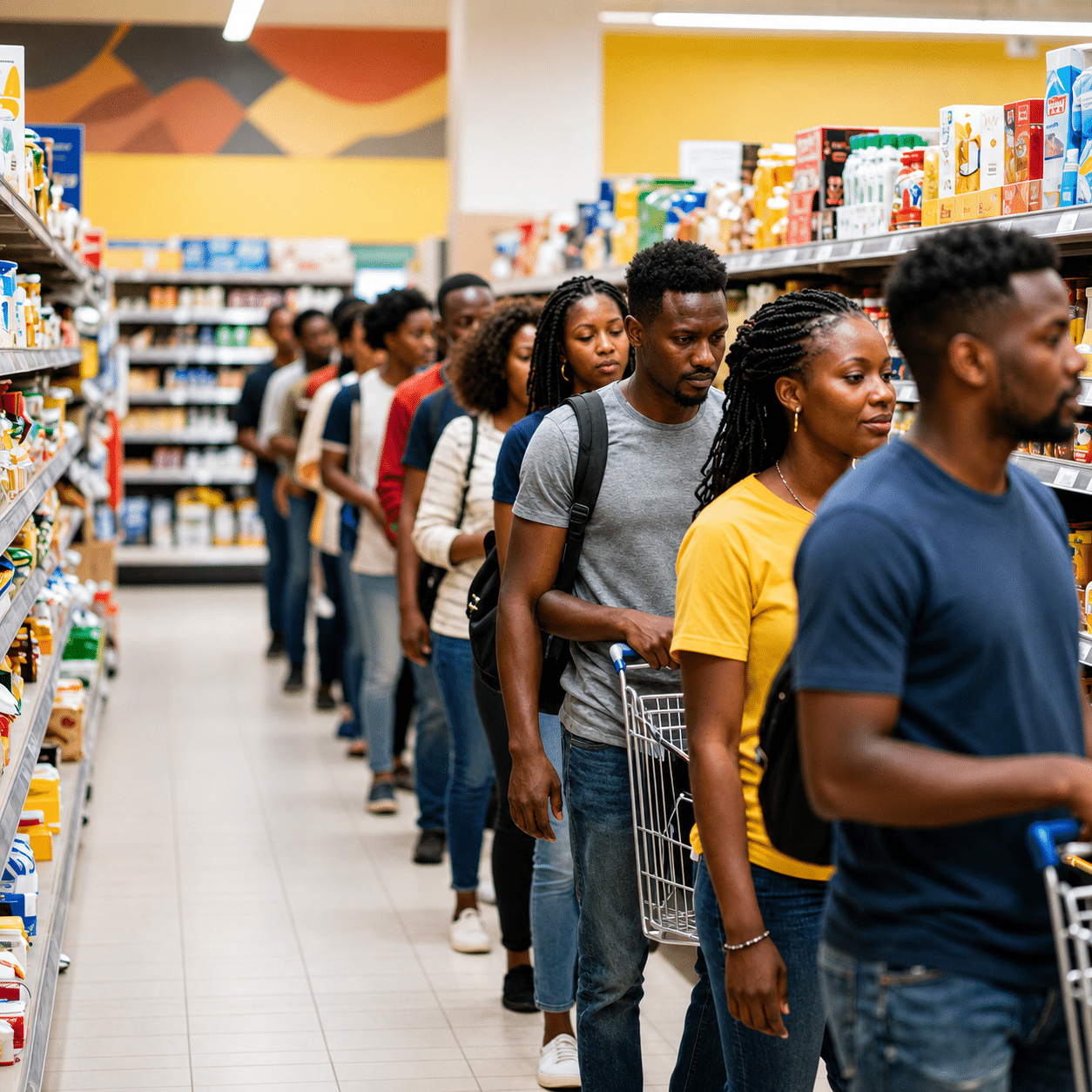
The significance of this shift extends beyond mere convenience. Retailers are redesigning stores around digital behaviour rather than around queues and fixed cashier infrastructure.
Historically, retail stores were designed around operational bottlenecks. Queues, tills, receipt verification, and payment counters dictated store layout and customer movement.
That’s changing. Increasingly, retailers are attempting to remove friction from these systems because friction slows customer flow, reduces basket conversion and creates operational inefficiency.
Find out more about the evolution of modern retail in Issue 2 2026 of Strategic Marketing for Africa, the thought-leadership magazine of the African Marketing Confederation.
Read the Digital Edition online or download it here. The Print Edition will be available shortly.