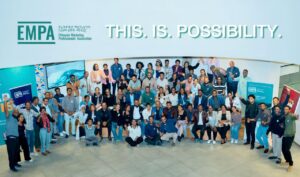
Pre-conference masterclass discusses taking African brands to the world
Participants challenged to identify, articulate and commercialise the cultural assets that make their brand ready for a global audience.
MARKETING CAMPAIGNS
By our News Team | 2023
Captain Morgan debuts its first pan-African campaign with a 45-second locally made TV commercial accompanied by digital and social edits.
Captain Morgan, the rum brand owned by international alcoholic beverages giant Diageo, has launched its debut pan-African campaign called ‘Spice On Africa’, as well as unveiling a new pack design.
Initially launching in Kenya and South Africa before being rolled out to Nigeria and markets across the continent later this year, the digital-first campaign includes a high-tempo 45-second TV commercial, accompanied by social and digital edits.
Photo courtesy of Diageo
45-second TV commercial, accompanied by social and digital edits.
The campaign is also appearing in out-of-home and on-trade and off-trade retail channels.
Captain Morgan’s video campaign features talent from Kenya, Nigeria and South Africa, and was crafted by creative agency RPM.
The advert features Nigerian afrobeats singer Yemi Alade’s ‘upbeat’ track Baddie, and is voiced by South African comedian Mpho Popps, and music artist Barak Jacuzzi of Kenya.
RPM worked with acclaimed director Kyle Lewis and South African production company, EGG films from Cape Town, to bring the creative to life.
Commitment to growing the brand in the region
“The new ‘Spice On Africa’ campaign is the first pan-African campaign we’ve seen at Captain Morgan and highlights our commitment to growing the brand in the region,” says Samori Gambrah, Global Brand Director at Captain Morgan.
“Spice is what makes Captain Morgan delicious, but it’s also an attitude – and this campaign is all about celebrating those who bring their unique ‘spice’ to the party. I’ve loved working with our Captain Morgan teams and creative talent across Africa on this campaign.”
Lesibane Mohale, Senior Creative at RPM, says the vibe and energy on set was very special.
“With the cast coming from Nigeria, Kenya and South Africa, an amazing crew and our director, Kyle Lewis, this exciting production was a melting pot of diverse talent and unique cultures coming together.
“We wanted this campaign to connect with our audience by showcasing the warmth, vibrancy and spirit that can be found across this incredible continent, and it was a spirit that could be found on set.”
In addition to the marketing campaign, Captain Morgan has begun the roll-out of a new pack design across Africa, which puts the ‘quality, flavour and spice’ of the rum at the forefront.
Creative agency Bulletproof was appointed to design the new pack, which includes a refreshed version of the brand’s famous ‘Captain’ icon.

Participants challenged to identify, articulate and commercialise the cultural assets that make their brand ready for a global audience.

Second outlet planned for Nairobi before year end, with Nigeria, South Africa and Morocco said to be future target markets.

Online search behaviour has changed significantly with the rise of AI. How can African brands adapt to this new marketing landscape?

Researchers propose a framework for packaging that senses, learns and acts – making packaging an active, AI-powered tool against food waste.

Country needs marketers to build recognition and consumer trust around Malawian products and national brand, says Deputy Minister.

Fashion brand suspends giant lingerie high above the city’s streets, using shadows to create a moving billboard for pedestrians and motorists.

Researchers describe AI influencers as having a ‘dual identity’. Consumers evaluate both ‘person’ and ‘technology’ identities at once.

Reputation and trust, once modest influences on hotel choice, have become some of the strongest predictors of patronage, study finds.

South African brands are increasingly setting the global benchmark for customer loyalty strategies, organisers say.

Global influences among younger consumers are still present, but they are being filtered through a distinctly Zambian lens.

Researchers find that lack of perceived ‘genuine care’ is the mechanism connecting AI involvement to lower trust ratings.