
Airline body urges African governments to act on opening market access
‘Strategies don’t move people. Now it is time to make the difficult decisions and execute them,’ senior executive stresses.
AFRICAN AVIATION
By our African Marketing Confederation News Team | 2025
As African commercial aviation expands, Marketing 5.0 has a vital role to play in enhancing operational efficiencies and customer service.
The aviation sector in Africa is experiencing dynamic growth and rapid transformation, resulting in various challenges and opportunities alongside an evolving technological landscape.
Photo: Adam Moreira via Wikimedia Commons
According to the African Airlines Association (AFRAA), passenger traffic for African airlines increased by 15% in 2024 compared to 2023. In December 2024, there was a 12.4% increase in traffic, driven by a 10.6% growth in international demand and a 5.5% increase in domestic traffic.
Similarly, the International Air Transport Association (IATA) reported in January 2025 that African airlines’ annual traffic rose 13.2% in 2024 versus the prior year. Full year 2024 capacity was up 9.5% and load factor climbed 2.5 percentage points to 74.5% – the lowest among regions but a record high for Africa. December 2024 traffic for African airlines rose 12.4% over December 2023.
These statistics reveal a clear upward trend in travel demand, underscoring the necessity for the continent’s airlines to enhance customer service, operational efficiency and value-added services. Effective marketing strategies will be crucial, as each initiative enhancing operational efficiency serves as a compelling selling point for airlines.
Integration of innovative technologies into marketing strategies
Marketing 5.0 emphasises the integration of innovative technologies – such as artificial intelligence (AI), big data, and augmented reality (AR) – into marketing strategies. This approach is increasingly influencing various industries, including aviation.
Notably, Marketing 5.0 recognises the generational diversity within society, accommodating five distinct generations simultaneously. In Africa, where aviation plays a growing role in economic and infrastructural development, adopting Marketing 5.0 can revolutionise how airlines engage with customers, optimise operations and create unique travel experiences.
At its essence, Marketing 5.0 seeks to harmonise technology with human interaction, aiming to enhance customer experiences through technological innovation. It leverages data analytics, AI-driven insights, automation and immersive digital experiences to reshape the connections between airlines, airports and passengers.
To find out more about the role that Marketing 5.0 can play in developing the African commercial aviation sector, read the current issue (Issue 1 2025) of Strategic Marketing for Africa, the magazine of the African Marketing Confederation. Find the Digital Edition here. A print edition is also available.

‘Strategies don’t move people. Now it is time to make the difficult decisions and execute them,’ senior executive stresses.

UTB says its ambition is to turn the visibility into interest, bookings and more visitors choosing to explore Uganda.

Short ads shown on TV increased website visits within five minutes of airing by 10-40% compared with longer advertisements.

Supeco’s rapid expansion shows how the discount model is becoming a bigger part of grocery retail in the North African country.

Consumers reward visible eco-friendly additions such as reusable bottles, but give little credit to businesses that reduce or remove products.
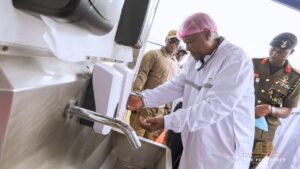
Nestlé believes Ghana will continue to play a leading role in the future of Central and West Africa.

Ethiopia’s marketers gather to celebrate hosting next year’s conference – but with an eye on the hard work ahead.

Tech is creating more ways for audiences to connect, but lasting value will come from understanding the people behind those connections.

The new production line at the historic Maydon Wharf facility in Durban will address growing international demand.

Tanzania, Kenya, Zimbabwe, Ethiopia and South Africa all feature in the African meetings, incentives, conferences and exhibitions awards.

Much of the broader conversation around AI in market research assumes conditions that do not consistently exist across many African markets, writes Soyinka Witness.