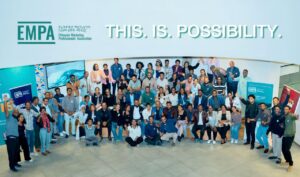
Pre-conference masterclass discusses taking African brands to the world
Participants challenged to identify, articulate and commercialise the cultural assets that make their brand ready for a global audience.
BRAND PERCEPTIONS
By our News Team | 2023
Innovative auto brand Tesla has more than US$4.1-billion at risk, exceeding than any other brand in a new study.
New research reveals that many of the world’s largest brands have value at imminent risk if sustainability perceptions of stakeholders are not aligned with sustainability performance. This is according to a study published by brand valuation consultancy, Brand Finance.
First launched at the World Economic Forum in Davos earlier this year, ‘The Sustainability Perceptions Index’ showed that, for many of the world’s most valuable businesses, there can be billions of dollars of financial value to be gained from enhanced Environmental, Social, and Governance (ESG) action and associated communication.
Photo by Makara Heng from Pexels
The researchers have now recalculated the valuations of each brand by considering their ESG performance by utilising data from CSRHub. The latter is a web-based tool that provides access to employee, environmental, community and governance ratings on most major companies in North America, Europe and Asia.
These newly derived values, in conjunction with the Sustainability Perceptions Scores (SPS), expose whether the public perceptions align with the actual performance of each brand.
Opportunity to generate value through genuine committment
“Our research found that where performance exceeds perception, there is an opportunity to rapidly generate value by communicating the brand’s genuine commitment to sustainability more effectively,” explains Robert Haigh, Strategy & Sustainability Director at Brand Finance.
“Conversely, where perception exceeds performance, value is at imminent risk as brands leave themselves open to public backlash and a ‘correction’ of their sustainability perceptions value.”
Tesla, perhaps surprisingly, is one such brand. Known as a pioneer of the electric vehicles and battery technology, Tesla’s image has clearly carried across into the perceptions held by global consumers.
It has the highest proportion of value underpinned by sustainability perceptions of any brand (26.9%) resulting in a Sustainability Perceptions Value of US$17.8-billion. However, the strength of this perception creates its own risk, because whilst Tesla performs well on environmental components of sustainability, it is weaker on governance and measures of social sustainability. Tesla’s weaker CSRHub scores therefore create a value at risk of up to US$4.1-billion. This is more than any other brand in the table.
Conversely, Microsoft has the highest positive gap value of any brand, according to Brand Finance’s research – US$1.5-billion. This reveals that Microsoft’s sustainability performance exceeds its sustainability perception; meaning there is an opportunity for Microsoft to generate up to US$1.5-billion through enhanced communication of its sustainability initiatives and services.
Luxury fashion house Chanel is an example of a brand that has both a (relatively) high Sustainability Perceptions Score and a high CSRHub score. By engaging with a wide range of stakeholder groups, Chanel can better align its sustainability performance with its sustainability perception – based on strong, authentic sustainability communication.
You can download the full report here.

Participants challenged to identify, articulate and commercialise the cultural assets that make their brand ready for a global audience.

Second outlet planned for Nairobi before year end, with Nigeria, South Africa and Morocco said to be future target markets.

Online search behaviour has changed significantly with the rise of AI. How can African brands adapt to this new marketing landscape?

Researchers propose a framework for packaging that senses, learns and acts – making packaging an active, AI-powered tool against food waste.

Country needs marketers to build recognition and consumer trust around Malawian products and national brand, says Deputy Minister.

Fashion brand suspends giant lingerie high above the city’s streets, using shadows to create a moving billboard for pedestrians and motorists.

Researchers describe AI influencers as having a ‘dual identity’. Consumers evaluate both ‘person’ and ‘technology’ identities at once.

Reputation and trust, once modest influences on hotel choice, have become some of the strongest predictors of patronage, study finds.

South African brands are increasingly setting the global benchmark for customer loyalty strategies, organisers say.

Global influences among younger consumers are still present, but they are being filtered through a distinctly Zambian lens.

Researchers find that lack of perceived ‘genuine care’ is the mechanism connecting AI involvement to lower trust ratings.