Current issue of AMC magazine brings critical insights for marketers
Issue 1 2026 of Strategic Marketing for Africa, the magazine for deep-thinking African marketing professionals, highlights key trends.
EXPORT MARKETS
By our African Marketing Confederation News Team | 2024
Improved stability and economic growth are enhancing Libya’s potential as an export market. Egypt, in particular, sees the opportunity.
Libya, an increasingly viable export market for FMCG products as it experiences a period of improved political stability and economic growth, is embroiled in a spat with Egypt that is preventing products from that country reaching Libyan consumers.
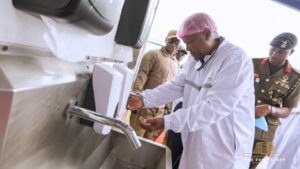
Egypt’s proposed new logistics area at the Al-Salloum land border. Photo: Presidency of Egypt
Consignments of soft drinks and yoghurts are among the products that have refused entry by Libyan authorities at the Al-Salloum land border crossing with Egypt.
Several thousand cartons of Schweppes lemon and mint soft drink were rejected by the Libyans last week, on grounds that most had passed their expiry date.
A thousand cartons of Almarai strawberry yogurt suffered a similar fate on grounds that they contained a prohibited colour agent known as E120. The agent is legal in many countries, including EU states.
According to some commentators, the real reason is a tit-for-tat response to Egypt’s decision to raise entry fees for Libyans entering the country. Citizens of both countries regularly cross the borders because the have family and tribal ties on both sides.
“We can read the new hardline approach by Libyan authorities as an attempt to send a clear message to Egypt’s government about its feelings on the new border fees,” comments Trendtype, the London-based emerging markets consultancy.
“Libya is an important expansion target for Egyptian manufacturers, keen to develop a valuable export market for what is currently overcapacity in the FMCG manufacturing sector.”
Consignments of soft drinks and yoghurts are among the products that have refused entry by Libyan authorities at the Al-Salloum land border crossing with Egypt.
Several thousand cartons of Schweppes lemon and mint soft drink were rejected by the Libyans last week, on grounds that most had passed their expiry date.
A thousand cartons of Almarai strawberry yogurt suffered a similar fate on grounds that they contained a prohibited colour agent known as E120. The agent is legal in many countries, including EU states.
According to some commentators, the real reason is a tit-for-tat response to Egypt’s decision to raise entry fees for Libyans entering the country. Citizens of both countries regularly cross the borders because the have family and tribal ties on both sides.
“We can read the new hardline approach by Libyan authorities as an attempt to send a clear message to Egypt’s government about its feelings on the new border fees,” comments Trendtype, the London-based emerging markets consultancy.
“Libya is an important expansion target for Egyptian manufacturers, keen to develop a valuable export market for what is currently overcapacity in the FMCG manufacturing sector.”

Issue 1 2026 of Strategic Marketing for Africa, the magazine for deep-thinking African marketing professionals, highlights key trends.

Rwanda’s tourism marketing arm signs agreement to be the English club’s main shirt sponsor after deal with Arsenal FC ends.

For too long, the PR landscape has had no shared standard for who practises in it or what responsibility they carry, founders say.

By carefully selecting followers to engage with an influencer’s post, marketers can significantly increase the post’s spread.

SA’s Advertising Regulatory Board finds Kia advertisement could be offensive to people with certain health disorders.

Global study finds AI is helping marketers produce more – but is not creating the time and creative space they expected.

Urban Africa will double its footprint, adding the equivalent of more than 4,000 Manhattans or almost 400 Singapores, The Economist reports.

Luc Demez brings experience from Europe and African countries as the Carrefour brand looks to expand into Nigeria with a local partner.

What makes brands successful in Africa? A summary of the award-winning paper presented at Esomar’s first conference in Africa.

Woolworths supermarket chain embraces an AI-powered chef as it leverages two decades of recipes to answer an age-old family question.

Consumers are prioritising their wellness despite tighter wallets, meaning sportswear remains one of the most resilient areas of fashion.