TRUST

Trust survey shows high levels of grievance towards most institutions

By our African Marketing Confederation News Team | 2025

Violence and spread of disinformation are now seen as legitimate tools for change, study by prominent PR company warns.

The 2025 Edelman Trust Barometer, released annually for the past 25 years by international PR firm Edelman, says global economic fears have transformed into grievance, with six in 10 respondents reporting a moderate to high sense of grievance.

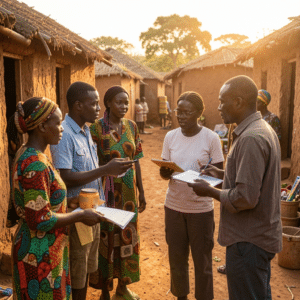
Photo: Vincent M.A. Janssen from Pexels

This is defined by a belief that government and business harm them and serve narrow interests, and ultimately the wealthy benefit while ordinary people struggle. Fear of experiencing discrimination has also surged 10 points to a record high of 63%. 


This holds true across genders, ages and economic levels, the PR company says. The 2025 Trust Barometer surveyed more than 33,000 respondents across 28 countries. 


“Over the last decade, society has devolved from fears to polarisation [and] to grievance,” says Richard Edelman, CEO of the company, in a media statement.  


“[Incumbent leaders] in the US, UK, France, Germany, South Korea and Canada were ousted amid voter anger over job loss to globalisation and inflation. We now see a zero-sum mindset (the belief that one person’s success can only come at the expense of another person’s failure) that legitimises extreme measures like violence and disinformation as tools for change.” 


The global launch event for the 2025 Trust Barometer findings took place during the World Economic Forum in Davos, Switzerland, and Richard Edelman has been one of the star media attractions at the event, which finishes today (24 January 2025). He has given multiple interviews warning of the “highly aggrieved world” that exists at present. 


Key factors that contribute to feeling of grievance 


The Trust Barometer media statement says grievance stems from four key factors:  


  • First is lack of hope for the next generation – belief that things in their country will be better than today for the next generation is at just 36% of respondents. 


  • Second is the mass-class trust divide – low-income respondents (48%) trust institutions 13 points less than those with higher income (61%).  


  • Third is a global unprecedented lack of faith in institutional leaders – an average of 69% of respondents worry that government officials, business leaders and journalists deliberately mislead them. This lack of faith is up 11 points since 2021.  


  • Fourth is confusion over credible information – 63% of respondents to the survey say it’s becoming harder to tell if news was produced by a respectable source or from attempted deception.  


Four in 10 respondents – 53% of those aged 18-34 – approve of one or more forms of hostile activism to bring about change. This includes attacking people online, intentionally spreading disinformation, threatening or committing violence, and damaging public or private property.  


A zero-sum mindset also prevails, with respondents believing gains for those with opposing politics come at their expense – a belief more than twice as common among those with high grievance (53%) than low grievance (23%). 


The study says four key institutions have a role to play in reversing the situation: Business; NGOs; government; and the media.  


It notes that NGOs, as unifiers, are the institution with the highest trust among those with a sense of high grievance. Government must prove its competence by delivering results that benefit citizens. Media must prioritise quality information over click-driven content to enable informed decisions. 


You can watch a YouTube video about the latest Trust Barometer here. 


You can read more about the survey here.

author avatar
Rozanne
0
    Your Cart
    Your cart is emptyReturn to Shop