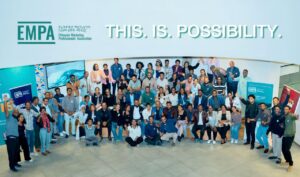
Pre-conference masterclass discusses taking African brands to the world
Participants challenged to identify, articulate and commercialise the cultural assets that make their brand ready for a global audience.
BUSINESS PERFORMANCE
By our African Marketing Confederation News Team | 2025
Decision in 2023 to discontinue operations in its homecare and skin-cleansing categories helps local subsidiary’s performance in 2024.
Despite a difficult economic climate in Nigeria that has seen many multinational FMCG businesses leave the country, Unilever Nigeria increased its revenue by 44% and gross profit by 74.6% in the last financial year.
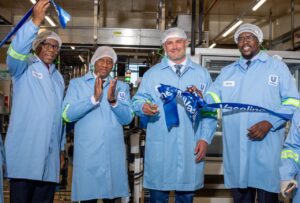
Photo credit: Unilever
This is according to the company’s interim financial statement for the year ending 31st December 2024, which was released last week. Unilever is the oldest manufacturing company in Nigeria and has a brand portfolio which includes Knorr seasoning and stock cubes, Closeup toothpaste and Royco soup.
The financial statement shows that revenue for the period under review rose by 44.2% to US$99-million (₦149.8-billion), up from $69-million (₦103.9-billion) for the previous period.
Gross profit increased by 74.6% to $37-million (₦55.7-billion), up from $21-million (₦31.9-billion) in the previous period.
Decision to discontinue some operations seems to have paid off
“The decision in 2023 to discontinue operations in its homecare and skin-cleansing categories, and increased net finance income in 2024, meant net profits rose by 89.3% year on year,” reports Trendtype, the emerging markets consultancy.
“Our year-on-year sustained growth trajectory is a testament to our commitment of serving consumers with our best brands to meet their daily needs of improved health and hygiene,” comments Unilever Nigeria Managing Director, Tobi Adeniyi.
“While we are pleased with our performance progress riding on the pillars of operational efficiency, cost optimisation, purposeful brands and increasing market share across key categories, we are committed to growing our business to enhance our socio-economic impact in the country.”
Unilever began trading soap in Nigeria in 1923 through its predecessor, Lever Brothers (West Africa) Ltd. The company later started to sell food and laundry products, introducing Omo in 1960 and opening a production facility to manufacture the popular laundry brand locally in 1964.
The business changed its name to Unilever Nigeria plc in 2001.

Participants challenged to identify, articulate and commercialise the cultural assets that make their brand ready for a global audience.

Second outlet planned for Nairobi before year end, with Nigeria, South Africa and Morocco said to be future target markets.

Online search behaviour has changed significantly with the rise of AI. How can African brands adapt to this new marketing landscape?

Researchers propose a framework for packaging that senses, learns and acts – making packaging an active, AI-powered tool against food waste.

Country needs marketers to build recognition and consumer trust around Malawian products and national brand, says Deputy Minister.

Fashion brand suspends giant lingerie high above the city’s streets, using shadows to create a moving billboard for pedestrians and motorists.

Researchers describe AI influencers as having a ‘dual identity’. Consumers evaluate both ‘person’ and ‘technology’ identities at once.

Reputation and trust, once modest influences on hotel choice, have become some of the strongest predictors of patronage, study finds.

South African brands are increasingly setting the global benchmark for customer loyalty strategies, organisers say.

Global influences among younger consumers are still present, but they are being filtered through a distinctly Zambian lens.

Researchers find that lack of perceived ‘genuine care’ is the mechanism connecting AI involvement to lower trust ratings.