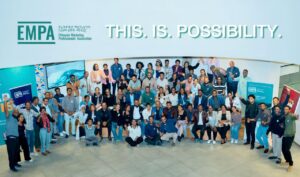
Pre-conference masterclass discusses taking African brands to the world
Participants challenged to identify, articulate and commercialise the cultural assets that make their brand ready for a global audience.
SUPPLY CHAIN
By our News Team | 2023
Equipped with the latest developments in automated storage and retrieval systems, it will handle high-mix, health and beauty products.
FMCG giant Unilever East Africa has opened a new 23,000 square metre warehouse in Nairobi. The facility cost US$3.6-m to build and has automated storage and retrieval systems that allow the company to process and ship its orders more efficiently.
According to Unilever, the warehouse is designed to flexibly handle high-mix, health, and beauty products across the region.
Photo credit: Blunt Architects
It is equipped with the latest developments in automated storage and retrieval systems and has a greater pallet capacity to enable the company to store, process and ship its products in a more efficient manner.
Increasing demand but limited warehousing capacity
Luck Ochieng, MD of Unilever Kenya, said that, with the new facility, the company aimed to close the gap between higher demand and shortage of supply. He noted that there has been increasing demand for Unilever’s products in recent times, but limited warehousing capacity to support this.
“At Unilever, we continue to invest and strengthen our commitment to Kenya with the expansion of our facilities in the country. We strongly believe in the potential of this country and our consumers, and we are fully committed to playing a role in their respective growth stories,” added Unilever’s Head of Supply Chain in Africa, Christian Byron.
He noted that 70% of raw and packaging materials used by Unilever for production in Africa was made in Africa, which had a positive impact on the affordability of the company’s products.
Unilever East Africa is present in Kenya, Ethiopia, Uganda, Tanzania and Rwanda. It has five factories in the region, which it says manufactures 81% of FMCG products sold in East Africa.

Participants challenged to identify, articulate and commercialise the cultural assets that make their brand ready for a global audience.

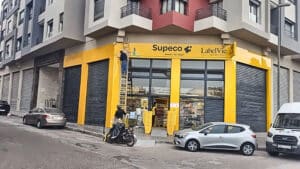
Second outlet planned for Nairobi before year end, with Nigeria, South Africa and Morocco said to be future target markets.

Online search behaviour has changed significantly with the rise of AI. How can African brands adapt to this new marketing landscape?

Researchers propose a framework for packaging that senses, learns and acts – making packaging an active, AI-powered tool against food waste.

Country needs marketers to build recognition and consumer trust around Malawian products and national brand, says Deputy Minister.

Fashion brand suspends giant lingerie high above the city’s streets, using shadows to create a moving billboard for pedestrians and motorists.

Researchers describe AI influencers as having a ‘dual identity’. Consumers evaluate both ‘person’ and ‘technology’ identities at once.

Reputation and trust, once modest influences on hotel choice, have become some of the strongest predictors of patronage, study finds.

South African brands are increasingly setting the global benchmark for customer loyalty strategies, organisers say.

Global influences among younger consumers are still present, but they are being filtered through a distinctly Zambian lens.

Researchers find that lack of perceived ‘genuine care’ is the mechanism connecting AI involvement to lower trust ratings.