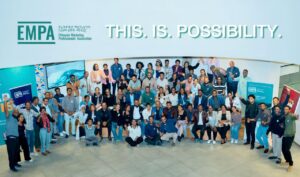
Pre-conference masterclass discusses taking African brands to the world
Participants challenged to identify, articulate and commercialise the cultural assets that make their brand ready for a global audience.
REWARDS PROGRAMMES
By our News Team | 2021
There are signs that brands competing in the credit card space are thinking differently about what drives spending and attracts customers.
Global financial services firm J.P. Morgan has acquired the food discovery and reviews service, The Infatuation. This is another sign that firms competing in the payments space are thinking differently about what drives consumer spending and excites customers.
Credit card spending matters hugely to banks’ business models. Among big spending customers, rewards are a key reason to choose one bank’s credit card product over another. The Infatuation’s acquisition – for an undisclosed sum – now joins several other dining-related perks J.P. Morgan can offer to its customers that will hopefully set it apart from the pack.
This demonstrates the wider rethink underway about what smart marketers need to do in engagement-based businesses like credit cards.
Photo by Clay Banks on Unsplash
As Brian Morrissey, former editor-in-chief of digital marketing firm Digiday comments: “some will build, some will buy” in order to acquire media assets capable of driving engagement. For instance, another US financial services company, Chase, (also owned by J.P. Morgan), launched a dining hub that gives access to deals in over 4 000 restaurants for holders of certain credit card products.
In 2019, American Express acquired the booking platform Resy, which has since expanded the credit card company’s client rewards offering.
Seeking popularity with Millennials
The Infatuation focuses on the North American market, but also maintains editorial operations in a handful of international locations. J.P. Morgan’s purchase of the service brings on board a media property that is extremely popular with Millennials.
Traditional perks have become almost unsustainably expensive during the pandemic. In the US, credit-card spending in restaurants is already growing under the loosening of restrictions there and ‘deals-on-meals’ come far cheaper than deals on air miles.
“[The deal] demonstrates J.P. Morgan’s commitment to meeting customers where they are with exceptional benefits, useful content and one-of-a-kind experiences, at scale,” J.P. Morgan said in a statement to the Financial Times newspaper.
Sourced from the Financial Times

Participants challenged to identify, articulate and commercialise the cultural assets that make their brand ready for a global audience.

Second outlet planned for Nairobi before year end, with Nigeria, South Africa and Morocco said to be future target markets.

Online search behaviour has changed significantly with the rise of AI. How can African brands adapt to this new marketing landscape?

Researchers propose a framework for packaging that senses, learns and acts – making packaging an active, AI-powered tool against food waste.

Country needs marketers to build recognition and consumer trust around Malawian products and national brand, says Deputy Minister.

Fashion brand suspends giant lingerie high above the city’s streets, using shadows to create a moving billboard for pedestrians and motorists.

Researchers describe AI influencers as having a ‘dual identity’. Consumers evaluate both ‘person’ and ‘technology’ identities at once.

Reputation and trust, once modest influences on hotel choice, have become some of the strongest predictors of patronage, study finds.

South African brands are increasingly setting the global benchmark for customer loyalty strategies, organisers say.

Global influences among younger consumers are still present, but they are being filtered through a distinctly Zambian lens.

Researchers find that lack of perceived ‘genuine care’ is the mechanism connecting AI involvement to lower trust ratings.