
Marketing Society of Rwanda joins the African Marketing Confederation
Its aims include developing professional standards and creating opportunities for Rwandan marketers to learn and network.
ECONOMY
By our African Marketing Confederation News Team | 2024
US dollar has been accounting for 85% of all transactions, causing difficulties for retailers. Can the new ZiG perhaps change that?
In what may be good news for Zimbabwe’s retail sector and the economy at large, the country’s government has unveiled a new gold-backed currency known as the ZiG. The name stands for ‘Zimbabwe Gold’.
Photo by Kampus Production from Pexels
Unveiling the new notes on Friday (5 April), John Mushayavanhu, Governor of the Reserve Bank of Zimbabwe, said the ZiG would be structured and set at a market-determined exchange rate.
The ZiG replaces a Zimbabwean dollar which has lost three-quarters of its value so far this year.
According to a BBC report, annual inflation in March reached 55% – a seven-month high. The broadcaster added that the US dollar, which accounts for 85% of transactions, will remain legal tender and most people are likely to continue to prefer this.
An early April report by Trendtype, the emerging markets investment consultancy, said major Zimbabwe supermarket chains such as Spar and TM (Pick n Pay) have adopted exclusive US dollar pricing in stores.
“The continued loss in value of the Zimbabwean dollar, which has depreciated by more than 70% in 2024, has caused huge problems for retailers who need to pay suppliers in US dollars but until recently have been mandated by the government to accept payments in local currency,” the consultancy stated.
It quoted the Retailers Association of Zimbabwe as saying that local manufacturers are more interested in supplying those who buy in US dollars than local currency.
Retail pricing has been in two currencies
“Retailers are supposed to price products in the local currency as well as giving the option to price in US dollars using the official exchange rate,” Trendtype noted.
“But the official rate (at that time) is some distance apart from the black-market rate, meaning that retailers have to increase the Zimbabwean dollar rate to remain profitable, which in turn disadvantages them against traditional retailers.”
Newsday, the Harare-based daily newspaper, reported in a February 2024 article that “the economy is edging closer to full dollarisation amid reports that the informal sector is rejecting the dual-pricing regime, exclusively selling in the United States dollar.
“Latest figures released by the Zimbabwe National Statistics Agency (ZimStat) yesterday (8 February), showed that 83% of transactions on key food purchases at national level were done in United States dollars.”
Looking at the retail sector, Trendtype noted in its report: “Despite hyperinflation, several retail businesses are adapting and thriving, although some are not.
“Truworths has closed stores. But TM (Pick n Pay) continues to open new outlets, as does major fast-food retailer Simbisa Brands. Powerspeed Electrical a local electricals retailer, has 22 branches and a retail space of 22,080m² in Zimbabwe. It plans to have 44,000m² of retail space within the next five years and sales volume growth of 90%.”
The new ZiG banknotes come in denominations of between 1 and 200.

Its aims include developing professional standards and creating opportunities for Rwandan marketers to learn and network.

Latest campaign aims to boost international arrivals while highlighting tourism’s contribution to South Africa’s economy and job creation.

Fast-growing middle class and promotion of electric vehicle adoption presents ‘substantial growth opportunities’ for Chinese brand.

Week of activities and events creates opportunities for networking, knowledge sharing and hearing insights from industry experts.

Research suggests that attention-grabbing campaigns may need to be paired with memorable visual design to influence buying decisions.

Cape Town’s port must be a competitive advantage rather than a bottleneck that constrains trade, investment and supply chains.

Experienced retail executive Ricardo Valente Da Conceicao returns to Africa as GM, bringing expertise gained in various overseas markets.
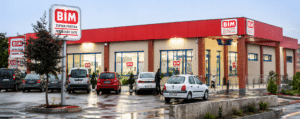
Local consumers are proving receptive to BIM’s private-label goods and hard-discount model as they struggle with inflationary pressure.

Issue 1 2026 of Strategic Marketing for Africa, the magazine for deep-thinking African marketing professionals, highlights key trends.

Rwanda’s tourism marketing arm signs agreement to be the English club’s main shirt sponsor after deal with Arsenal FC ends.

For too long, the PR landscape has had no shared standard for who practises in it or what responsibility they carry, founders say.