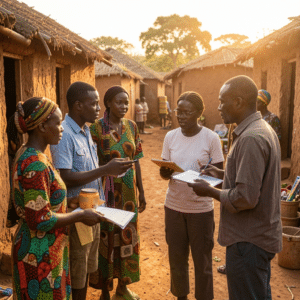
Pre-conference masterclass discusses taking African brands to the world
Participants challenged to identify, articulate and commercialise the cultural assets that make their brand ready for a global audience.
CONSUMER TRENDS
By our News Team | 2023
‘Africa Life 2023-2024’ examines key markets in East and West Africa, finding changing consumption habits in response to economic difficulties – but positives, too.
While for many African consumers, the good years prior to Covid have morphed into a much more challenging period of economic difficulty, there continues to be an indomitable spirit of resilience and positivity that gives hope for the future.
For brands and their marketing teams – frequently struggling amidst high inflation, supply chain issues, exchange-rate concerns and other challenges – the steadfast determination of ordinary Africans to make tomorrow a better day is a ray of sunshine in the economic gloom; a rallying point for brand plans and business strategies that can look beyond the short term.
Photo credit: Kantar
The latest Kantar ‘Africa Life 2023-2024’ study – released in the latter part of 2023 and covering the nations of Nigeria, Senegal, Ethiopia, Kenya, Tanzania and Uganda – emphasises the African spirit as one of the reasons that consumer-facing businesses, particularly multinationals headquartered far beyond the continent, can continue to invest here and plan for the longer term.
“We see institutions, multinationals, and investors question whether African nations can sustain and maintain the gains they’ve seen in recent years. My argument is: ‘yes, we can’,” said Dan Oseman, a 10-year Africa veteran and Chief Growth Officer for Kantar’s Insights Division in West, East and Central Africa during the presentation that launched the latest study.
It’s not a marketing slogan
He added that ‘Africa is on the rise’ is not a marketing slogan. “It is a reality. While we do expect the next few years to be tough, the underlying fundamentals of Africa’s youthful, aspirational and innovative societies, empowered by technology, haven’t changed. What is changing is how people are evolving in their ambitions and lifestyles.”
To compile Africa Life 2023-2024’, the consultancy had 5,000 conversations with consumers, including in Ethiopia, a sometimes lesser-understood market. The latter threw up insights which senior Kantar executive, Ndeye Diagne, intriguingly referred to as “the Ethiopian Exception” in her presentation.
That exception comes quickly to the fore in the study’s comparison of ‘Optimism vs Pessimism’ in Africa – where, it must be said, optimism has taken a hit due to economic circumstances and has declined for the past four years. Yet it still remains higher than in other regions of the world.
Ethiopians have the lowest level of pessimism of all the countries surveyed. They are also the most patriotic.
Apart from Uganda (49%), all the countries scored 50% or above for optimism, with Ethiopia and Senegal being the most optimistic.
To find out more about the Kantar ‘Africa Life 2023-2024’ study, read the latest issue (Issue 4 2023) of ‘Strategic Marketing for Africa’. You can browse or download a free copy of the magazine here.

Participants challenged to identify, articulate and commercialise the cultural assets that make their brand ready for a global audience.

Second outlet planned for Nairobi before year end, with Nigeria, South Africa and Morocco said to be future target markets.

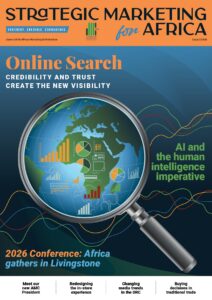
Online search behaviour has changed significantly with the rise of AI. How can African brands adapt to this new marketing landscape?

Researchers propose a framework for packaging that senses, learns and acts – making packaging an active, AI-powered tool against food waste.

Country needs marketers to build recognition and consumer trust around Malawian products and national brand, says Deputy Minister.

Fashion brand suspends giant lingerie high above the city’s streets, using shadows to create a moving billboard for pedestrians and motorists.

Researchers describe AI influencers as having a ‘dual identity’. Consumers evaluate both ‘person’ and ‘technology’ identities at once.

Reputation and trust, once modest influences on hotel choice, have become some of the strongest predictors of patronage, study finds.

South African brands are increasingly setting the global benchmark for customer loyalty strategies, organisers say.

Global influences among younger consumers are still present, but they are being filtered through a distinctly Zambian lens.

Researchers find that lack of perceived ‘genuine care’ is the mechanism connecting AI involvement to lower trust ratings.