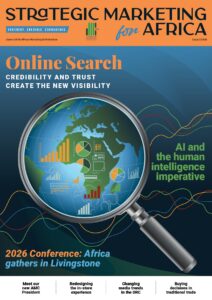
Search is fragmenting – credibility and trust create the new visibility
Online search behaviour has changed significantly with the rise of AI. How can African brands adapt to this new marketing landscape?
DATA-DRIVEN MARKETING
By our News Team | 2022
Almost half of top marketers questioned in global study say that access to the right customer data is ‘hit or miss’.
More than 60% of marketers are only moderately confident, or worse, in their data, analytics and insights systems, while almost 50% say access to relevant customer data is hit or miss.
These are among the findings of a study on data-driven marketing conducted by the Chief Marketing Officer (CMO) Council and GfK, an international market intelligence company.
The High-velocity Data Marketer report is based on a survey of over 300 marketing leaders globally. Additionally, the group conducted in-depth interviews with executives at various institutes.
Photo by Azraelito via Wikimedia Commons
This new research examines the high-velocity data marketing maturity curve, including:
Among the key findings from the survey:
“CMOs around the world have entered a new era of high-velocity data marketing,” says Donovan Neale-May, Executive Director of the CMO Council.
“Many need to get better at extracting relevant data signals across channels, generating actionable insights, making insights available in real-time, and going deeper and more granular with customer insights.”
Adds Gonzalo Garcia Villanueva, CMO of GfK: “CMOs today need to manage hyper-targeted brands and messaging across thousands of potential touchpoints.
“Mastering this new landscape requires the best dashboards and data — yet our research shows that relatively few CMOs actually have the sophisticated insights and tools they need.
“Marketing leaders need to partner with CTOs, commercial leads and other key stakeholders to be sure that organisations have the high-velocity data and platforms they need to meet aggressive growth targets. CMOs are uniquely positioned to curate those insights, informing essential decisions through just the right combination of learnings,” concludes Villanueva.

Online search behaviour has changed significantly with the rise of AI. How can African brands adapt to this new marketing landscape?

Researchers propose a framework for packaging that senses, learns and acts – making packaging an active, AI-powered tool against food waste.

Country needs marketers to build recognition and consumer trust around Malawian products and national brand, says Deputy Minister.

Fashion brand suspends giant lingerie high above the city’s streets, using shadows to create a moving billboard for pedestrians and motorists.

Researchers describe AI influencers as having a ‘dual identity’. Consumers evaluate both ‘person’ and ‘technology’ identities at once.

Reputation and trust, once modest influences on hotel choice, have become some of the strongest predictors of patronage, study finds.

South African brands are increasingly setting the global benchmark for customer loyalty strategies, organisers say.

Global influences among younger consumers are still present, but they are being filtered through a distinctly Zambian lens.

Researchers find that lack of perceived ‘genuine care’ is the mechanism connecting AI involvement to lower trust ratings.

Explore the 2026 AMC Conference speaker line-up. Top African marketing voices gather in Zambia to tackle AI, AfCFTA, and brand power. Register today.

New industry currency will bring South African television and online video audiences together in a single measurement system.