Africa declares a new standard for its communications profession
For too long, the PR landscape has had no shared standard for who practises in it or what responsibility they carry, founders say.
E-COMMERCE
By our News Team | 2022
Nigerian-based company says consumer demand saw its orders increase by 40 percent year-on-year and revenue rise by 44 percent.
African consumers’ uptake of e-commerce clearly shows no sign of abating, with the release this week of Jumia’s first quarter 2022 financial results. The Africa-focused e-commerce giant was founded in Nigeria in 2012 and now operates across the continent.
The company, which is listed on the New York Stock Exchange, reported that its orders grew by 40% year-over-year – from 6.6-million to 9.3-million. Gross merchandise value or GMV (the total value of merchandise sold over the period) rose by 27% year-over-year – from US$198.9-million to $252.7-million. Revenue reached $47.6-million, a 44% rise over the same period in 2021.
“We kicked off 2022 with very strong growth momentum, closing the first quarter with the highest GMV and Order growth rates of the past nine quarters,” commented Jeremy Hodara and Sacha Poignonnec, Co-Chief Executive Officers of Jumia, in a media statement.
“We remain focused on taking the business forward on our path to profitability, driving faster usage growth with improved levels of marketing efficiency. Sales and Advertising expense per Order and as [a] percentage of GMV decreased sequentially, both reaching their lowest levels in the past four quarters.”
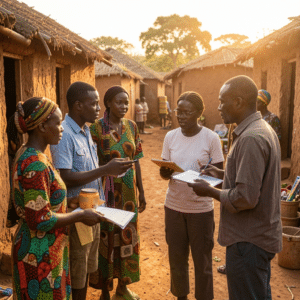
Photo by Kindel Media on Pexels
A growth engine for sellers and businesses
The pair added: “Our focus continues to be on making Jumia a compelling destination for the everyday needs of African consumers and a growth engine for sellers and businesses in Africa and beyond.”
According to information released by the company, in the first quarter of 2022 it continued executing its growth acceleration strategy, the key levers of which are:
Commenting on its marketing efforts, the company noted: “Brand awareness and consideration are core pillars of our marketing strategy and key to foster customer trust. We were pleased to see Jumia ranked #6 in the 2021 Most Influential Brands survey in Egypt released by Ipsos in March 2022.”
Discussing its pricing strategy, Jumia said that price competitiveness is a key component of its value proposition for consumers, particularly in a more challenging macro environment that drives increased consumer price sensitivity.
“We are upgrading our price benchmarking tool into an automated system covering the full product assortment of Jumia, incorporating data from both online and offline channel checks. The new system leverages machine-learning algorithms to match images and product features, enhancing the speed and accuracy of screening and matching. It also allows for real-time price adjustment with dedicated modules for margin optimisation.”

For too long, the PR landscape has had no shared standard for who practises in it or what responsibility they carry, founders say.

By carefully selecting followers to engage with an influencer’s post, marketers can significantly increase the post’s spread.

SA’s Advertising Regulatory Board finds Kia advertisement could be offensive to people with certain health disorders.

Global study finds AI is helping marketers produce more – but is not creating the time and creative space they expected.

Urban Africa will double its footprint, adding the equivalent of more than 4,000 Manhattans or almost 400 Singapores, The Economist reports.

Luc Demez brings experience from Europe and African countries as the Carrefour brand looks to expand into Nigeria with a local partner.

What makes brands successful in Africa? A summary of the award-winning paper presented at Esomar’s first conference in Africa.

Woolworths supermarket chain embraces an AI-powered chef as it leverages two decades of recipes to answer an age-old family question.

Consumers are prioritising their wellness despite tighter wallets, meaning sportswear remains one of the most resilient areas of fashion.

Nominations for the 2026 African Marketing Confederation and African Supply Chain Confederation awards close on 31 July.

Consumers may stick with troubled brands because their emotional attachment overrides the perceived risk, study finds.