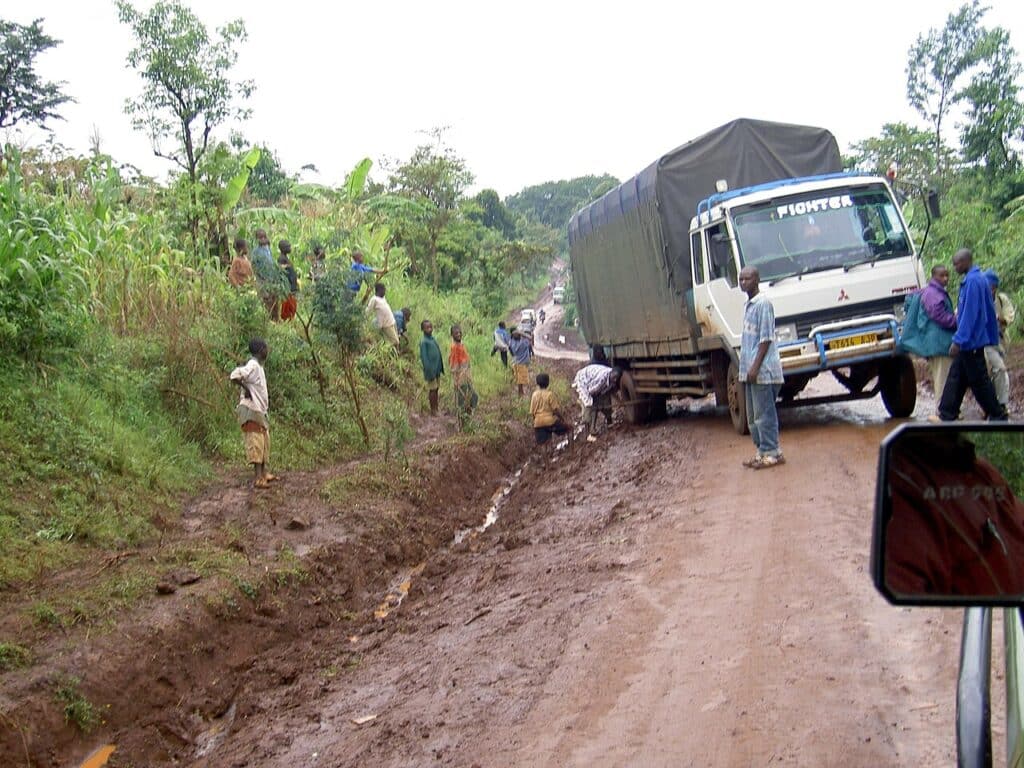
Stretching over 1,400km, the corridor is described as the economic backbone of Cameroon and a critical lifeline for the landlocked Central African Republic (CAR), carrying more than 80% of the country’s external trade.
“By rehabilitating infrastructure, reducing bottlenecks, and piloting sustainable maintenance systems, the programme will lower transport costs, improve market access, and support inclusive growth across one of Central Africa’s most vital trade routes,” the World Bank says.
Despite its strategic importance, the corridor has long suffered from deteriorated roads, transport costs as high as US$270 per ton, journey times of 9 to 12 days under normal conditions, and 38 checkpoints in Cameroon alone –17 of which involve informal payments.
There is concern that these barriers choke trade, raise consumer prices, undermine food security, and keep millions of people isolated from economic opportunity.
According to the World Bank, the investments will rehabilitate key road segments to climate-resilient standards, establish axle-load control stations, develop logistics hubs and feeder roads, strengthen value chains, and support trade facilitation and institutional reforms.
The first phase, costing US$525-million, will focus on rehabilitating priority infrastructure, improving road safety and strengthening road maintenance systems in Cameroon, the Central African Republic and across the wider Central African Economic and Monetary Community (CEMAC) region.
CEMAC is a regional economic bloc comprising six countries: Cameroon, the Central African Republic, Chad, Equatorial Guinea, Gabon, and the Republic of the Congo. The community shares a common central bank and a single currency, the CFA franc.
“The programme is anchored in a broader vision of regional integration within CEMAC, addressing deteriorated infrastructure, high transport costs, road safety and persistent barriers such as excessive checkpoints and informal payments,” comments Cheick Kanté, Division Director at the World Bank.
“Through a phased approach, it combines infrastructure rehabilitation, logistics and policy reforms, and initiatives to unlock economic opportunities and attract private investment.”
Cameroon as a regional logistics hub
For Cameroon, the project also supports its ambition to strengthen its position as a regional logistics hub built around the ports of Douala and Kribi, as well as transit services, trucking operations and cross-border trade activities, a news report by Business in Cameroon states.
In March 2026, Cameroon and an international development consortium launched the Kribi Port Industrial Zone (KPIZ) project, with the aim of driving the economic transformation of the country and the CEMAC region.
Located in the immediate vicinity of the deep-water port of Kribi and covering nearly 4,000 hectares, KPIZ benefits from a strategic geographical position, a hinterland extended to Central Africa, as well as a strong potential for the development of industrial, logistics, port and tourism activities.
According to the website Ports Africa, the project includes the construction of essential infrastructure networks (roads, energy, water, telecommunications), the development of a business and conference centre, as well as modern logistics facilities and specialised industrial zones.
The estimated cost of the KPIZ project is approximately US$905.5-million.