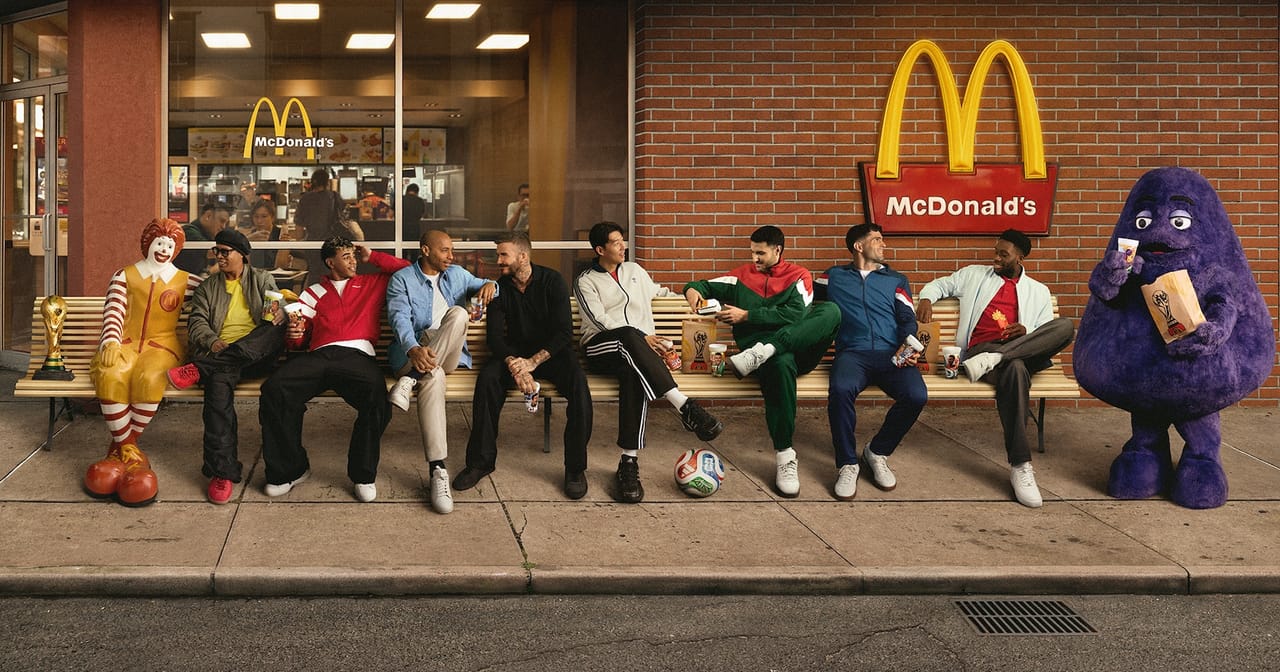
Fast-food giant McDonald’s has surprised the marketing world by announcing the end of its 30-plus years of sponsorship of the FIFA World Cup. The company has been involved with global sport’s highest-profile event since 1994.
According to the publication Restaurant Business, the most recent tournament – held in the US, Canada and Mexico earlier this year – was the largest global marketing effort in McDonald’s history, involving some 100 different markets around the world. Yet that effort produced underwhelming results.
“That has prompted company executives to shift its marketing strategy. One of those changes involves using what executives call ‘borrowed IP’,” says Restaurant Business.
Last month, Chief Marketing Officer for McDonald’s, Morgan Flatley, said in an interview: “I think we’ve become overly reliant on borrowed IP … and I think we need to be very selective and do it a few times versus becoming a frequent piece of our calendar.”
However, the World Cup exit does not signal a move away from sports sponsorship altogether by the company.
Sport and culture will remain important
“Sport and culture will remain important ways we connect with our fans as we sharpen our focus on creating distinctive McDonald’s experiences that deepen those connections year-round,” McDonald’s says in a statement.
It currently has an involvement in soccer in the US and in France, and has a Formula 1 sponsorship in Latin America, for example.
Business Insider, a well-known business publication, suggests the decision shows how major global brands are reassessing the cost, clutter and commercial return of sports’ biggest properties.
“While many marketers continue to spend heavily on sports, they often find it hard to measure the commercial uplift from their sponsorship outlays,” the publication states.
Research firm GlobalData Sport estimates the FIFA-McDonald’s deal was valued at US$40-million annually. But that’s not the end of the marketing spend.
Bob Lynch, founder and CEO of SponsorUnited, a sports and entertainment intelligence platform, says: “You’ve got to spend another probably $70 to $100-million dollars, just to bring those things to life outside of the spend with FIFA.”