
Search is fragmenting – credibility and trust create the new visibility
Online search behaviour has changed significantly with the rise of AI. How can African brands adapt to this new marketing landscape?
MEDIA BUYING
By our News Team | 2022
The platform’s new business strategy to accept paid advertising for the first time is said to exclude children’s content and original movies.
Video entertainment-streaming platform Netflix announced in May that it would, for the first time be accepting advertising. This is so that it can offer lower-cost subscription packages to consumers and thereby boost subscriber numbers.
But is seems the platform won’t be running any of its new-found ads within children’s programming; neither will it allow advertising within original movies. The former is aimed at protecting younger viewers and also avoiding the ongoing controversies and accusations of exploitation being levelled against ads that target kids.
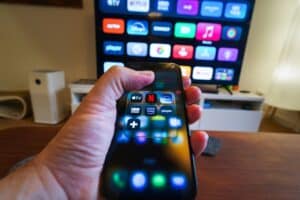
Photo by August de Richelieu from Pexels
The latter is apparently to appease film-makers, who don’t want the impact of their original movies dissipated by advertising breaks.
However, Netflix is said to be planning to run ads during its original series such as ‘Stranger Things’ and ‘Bridgerton’.
Details about the Netflix ad strategy were first published by news agency Bloomberg and subsequently reported by other media outlets. Netflix, however, has declined to comment.
Ad-free kids’ programming a long-term benefit
“If [Netflix] were to keep its kids’ programming ad-free, it could help to make up for its recent loss of subscribers,” the website Tech Crunch reported.
“Some parents may have strayed from the service due to the high price, so the upcoming cheaper ad-supported tier could help them save money while also giving their kids an ad-free streaming experience.”
It added: “Advertising and children’s programming don’t mix well. Google and YouTube realised this after paying US$170-million for violating kids’ privacy laws. Targeting ads to individual children is seen as exploitative to some, and Netflix probably doesn’t want this reputation — nor do its advertisers.”
Analysts predict that Netflix will be one of the most prominent players in online video advertising, generating an estimated $4-billion a year in ad sales.
Netflix has been losing customers and faces growing competition in the global video-streaming market from the likes of Disney, Home Box Office (better known as HBO) and others
In mid-April, Netflix announced that it had lost subscribers for the first time in more than a decade. In the North American market alone, its subscriber numbers have dropped by more than a million.

Online search behaviour has changed significantly with the rise of AI. How can African brands adapt to this new marketing landscape?

Researchers propose a framework for packaging that senses, learns and acts – making packaging an active, AI-powered tool against food waste.

Country needs marketers to build recognition and consumer trust around Malawian products and national brand, says Deputy Minister.

Fashion brand suspends giant lingerie high above the city’s streets, using shadows to create a moving billboard for pedestrians and motorists.

Researchers describe AI influencers as having a ‘dual identity’. Consumers evaluate both ‘person’ and ‘technology’ identities at once.

Reputation and trust, once modest influences on hotel choice, have become some of the strongest predictors of patronage, study finds.

South African brands are increasingly setting the global benchmark for customer loyalty strategies, organisers say.

Global influences among younger consumers are still present, but they are being filtered through a distinctly Zambian lens.

Researchers find that lack of perceived ‘genuine care’ is the mechanism connecting AI involvement to lower trust ratings.

Explore the 2026 AMC Conference speaker line-up. Top African marketing voices gather in Zambia to tackle AI, AfCFTA, and brand power. Register today.
New industry currency will bring South African television and online video audiences together in a single measurement system.