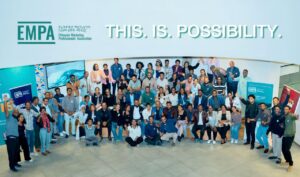
Pre-conference masterclass discusses taking African brands to the world
Participants challenged to identify, articulate and commercialise the cultural assets that make their brand ready for a global audience.
MARKETING JOBS
By our African Marketing Confederation News Team | 2024
Technical complexity and uncertainty in the business environmental can lead to burnout as well as increased job losses, says Gartner study.
With evolving organisational dynamics and rapid technology changes, 87% of marketers in the US are concerned about technology, including GenAI, replacing jobs in their industry.
Photo by Canva Studio from Pexels
This is according to a survey by Gartner, the technological research and consulting firm, conducted in the latter part of 2023.
It found that 89% of marketers are concerned about layoffs at their company. While most marketers are optimistic about their career progression and skill preparedness, 55% report experiencing mismatched job expectations in their current roles.
Undue burden from marketing technology.
This is being compounded by environmental uncertainty and undue burden from marketing technology. Sixty-one percent of marketers revealed they have encountered a martech or process change in the past 12 months.
In addition, marketers also cited instability in leadership as a factor, with 20% having experienced a recent change in senior marketing leadership.
“These findings should be a red flag for CMOs, as high environmental uncertainty, mismatched role expectations, and [the] martech burden can lead to burnout as well as increased attrition,” says Iliyana Hadjistoyanova of the Gartner Marketing Practice.
“CMOs must refocus their talent strategy and prioritise development with a strong focus on upskilling and change management to ensure their function is prepared in the face of ongoing disruption.”
Additional Gartner survey findings include:
“Marketing’s use of technology is constantly adapting, and the accelerated adoption of GenAI will encourage greater performance and engagement, enhance creativity, as well as free up time to allow marketers to engage in more thought-intensive work,” says Hadjistoyanova.
“While CMOs cannot fully insulate their employees from change, they must take early action in change management in a clear and transparent manner to ensure employee buy-in, and mitigate any negative impacts of change.”

Participants challenged to identify, articulate and commercialise the cultural assets that make their brand ready for a global audience.

Second outlet planned for Nairobi before year end, with Nigeria, South Africa and Morocco said to be future target markets.

Online search behaviour has changed significantly with the rise of AI. How can African brands adapt to this new marketing landscape?

Researchers propose a framework for packaging that senses, learns and acts – making packaging an active, AI-powered tool against food waste.

Country needs marketers to build recognition and consumer trust around Malawian products and national brand, says Deputy Minister.

Fashion brand suspends giant lingerie high above the city’s streets, using shadows to create a moving billboard for pedestrians and motorists.

Researchers describe AI influencers as having a ‘dual identity’. Consumers evaluate both ‘person’ and ‘technology’ identities at once.

Reputation and trust, once modest influences on hotel choice, have become some of the strongest predictors of patronage, study finds.

South African brands are increasingly setting the global benchmark for customer loyalty strategies, organisers say.

Global influences among younger consumers are still present, but they are being filtered through a distinctly Zambian lens.

Researchers find that lack of perceived ‘genuine care’ is the mechanism connecting AI involvement to lower trust ratings.