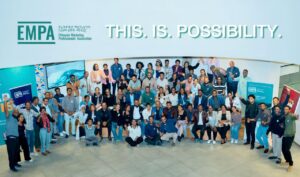
Pre-conference masterclass discusses taking African brands to the world
Participants challenged to identify, articulate and commercialise the cultural assets that make their brand ready for a global audience.
SOCIAL MEDIA STRATEGY
By our News Team | 2023
Researchers find that African marketers rely significantly more on social media as a marketing tool than their global counterparts.
Meltwater has published its State of Social Media for Africa 2023 study comparing local and global trends. According to the media monitoring and social listening company, this reveals that the importance of social media is increasing among organisations due to global economic uncertainty.
With brand awareness a priority, more than half of the survey respondents (52%) stated that economic uncertainty has made social media a more important channel for their organisation.
Photo by Cottonbro Studio from Pexels
Of particular relevance to African marketers is the finding that, out of more than 170 countries surveyed globally by Meltwater, African countries rely significantly more on social media as a marketing tool (74%) than their counterparts in other regions (only 52%).
Most notably, WhatsApp usage in this region is 35% higher than the global average, emphasising how much this platform is used by businesses and marketers on the continent, versus their international colleagues.
Facebook still dominates in Africa
Looking at social media in general, the other channels that dominate the social landscape in Africa are Facebook (88%), Instagram (76%) and LinkedIn (74%). Twitter (67%) is close behind. In terms of growth, the use of TikTok is rapidly increasing (28%).
While social media marketing has different purposes, the survey results show that increasing brand awareness (81%) and brand engagement (60%) are top of the agenda across all sectors (B2B, B2C and NGOs). However, while the top two social media goals appear to be brand-related, only 23% of organisations use brand reputation as a key metric.
“While brand perception and brand awareness has always been integral, this trend seems to be increasing in 2023,” says Katherine McInnes, Head of Marketing for Africa at Meltwater.
“We still believe that marketing professionals will face similar challenges – such as lack of time or resources. However, social media is an exceptional tool for combating these challenges, which shows in the report. Investing in social media channels, particularly TikTok, is an effective method of creating a strong brand.”

Participants challenged to identify, articulate and commercialise the cultural assets that make their brand ready for a global audience.

Second outlet planned for Nairobi before year end, with Nigeria, South Africa and Morocco said to be future target markets.

Online search behaviour has changed significantly with the rise of AI. How can African brands adapt to this new marketing landscape?

Researchers propose a framework for packaging that senses, learns and acts – making packaging an active, AI-powered tool against food waste.

Country needs marketers to build recognition and consumer trust around Malawian products and national brand, says Deputy Minister.

Fashion brand suspends giant lingerie high above the city’s streets, using shadows to create a moving billboard for pedestrians and motorists.

Researchers describe AI influencers as having a ‘dual identity’. Consumers evaluate both ‘person’ and ‘technology’ identities at once.

Reputation and trust, once modest influences on hotel choice, have become some of the strongest predictors of patronage, study finds.

South African brands are increasingly setting the global benchmark for customer loyalty strategies, organisers say.

Global influences among younger consumers are still present, but they are being filtered through a distinctly Zambian lens.

Researchers find that lack of perceived ‘genuine care’ is the mechanism connecting AI involvement to lower trust ratings.