Brand agency Penquin strengthens leadership team with two appointments
Albert De Andrade is named as Chief Creative Officer and Lerato Moleko is appointed Strategy Director.
MARKETING FOR GOOD
By our African Marketing Confederation News Team | 2024
Promoting over-consumption and over-spending are accusations often levelled at marketing. Are we in denial or becoming a force for good?
A recent study by American academics, published in the peer-reviewed Journal of Macromarketing, questions marketing’s growth mantra and its impact on climate change, urging more focus on ‘marketing for good’ among marketing educators.
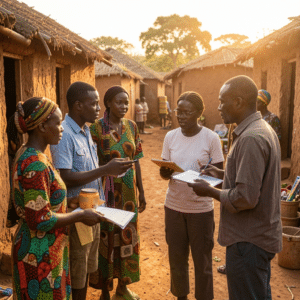
Photo by Gustavo Fring from Pexels
Lead author Sabrina Helm, an Associate Professor at the University of Arizona, and her co-authors surveyed marketing educators from 42 countries to understand if, and how, they are integrating climate change into their curricula.
They found that just over one-third of respondents actively integrate sustainability and climate change into their classrooms. About half recognise the need for change, but feel stuck teaching ‘business-as-usual’ marketing curricula.
The remaining respondents value the standard marketing curricula. Members of this group don’t deny climate change. Rather, they believe marketing education is not the place to address the issue.
The African perspective
But what’s the viewpoint of the African marketing community? Are these developed-world concerns with limited relevance on our continent? ‘First World problems’, to quote an oft-used phrase?
The feeling seems to be ‘no’ – we’re all in this together, whether we’re marketers in Lagos or London, Accra or Amsterdam, Beijing or Brazzaville.
Helen McIntee, President of the African Marketing Confederation and a former academic and marketing lecturer, believes there’s a clear need for African universities, and marketing bodies in general, to educate on climate change and marketing’s place within it.
“It is very important, especially with the increasing pressures that consumerism is placing on the environment, particularly in Africa,” she says.
Sean Mwawi Longwe, Head of Marketing, Business Development and Communications at Ritz Attorneys at Law in the Malawian city of Blantyre, likes to talk of “marketing with a conscience”, which he defines as “where organisations conduct marketing strategies in a socially responsible and ethical manner, with a focus on promoting positive social impact and sustainability”.
He emphasises that, in today’s increasingly aware and enlightened consumer environment, marketing professionals must align their strategies with principles of integrity, responsibility, respect and trust.
You will find this story, and much more, in Issue 1 2024 of Strategic Marketing for Africa – the voice of African marketing and the official publication of the African Marketing Confederation (AMC).
Read it online or download it here. A print edition of the magazine is also available.

Albert De Andrade is named as Chief Creative Officer and Lerato Moleko is appointed Strategy Director.

Dispensers selling small quantities of basic grocery necessities are part of a small-scale leadership development programme.

In a high-noise environment, brands must show they understand how people live and what matters to them right now.

Researchers find posts containing stronger competence cues are more likely to be shared than posts dominated by emotional language.
Technical trial run held at former factory to determine whether the production line can viably be brought back to life.

Initiative allows the Albany bread brand to ensure product accessibility and expand its route to market in a highly competitive environment.

Strategic Marketing for Africa, the publication for deep-thinking African marketing professionals, is not to be missed.

Completion of Wave 4 fieldwork at the end of September will mark an important milestone for the new measurement system.

Consumers will be able to block all electronic direct marketing or tailor their preferences by marketer, industry or communication channel.

TMSA is looking for the campaigns that shifted a market, the brands that earned trust, and the people who set the standard.

Lessons from pizza delivery can be transferred to any business that sells products online and relies upon delivery channels.