Ethiopia moves to bolster its coffee exports to the Chinese market
Opening of an Ethiopian coffee-trading centre in Zhuzhou will establish direct sales channels, boost relationships and host product displays.
SOCIAL MEDIA
By our News Team | 2023
Overall engagement with customers on X can directly impact a company’s future performance and financial outcomes, say researchers.
In the digital age, a new Twitter (now known as X) social media strategy can have implications for a healthy bottom line.
How companies handle customer complaints on social media plays a critical role in their customer-focused performance management systems. However, there has been a notable lack of descriptive information related to assessing managerial performance based on the handling of online complaints.
Illustration courtesy of Loyalty Leader
New research conducted by a joint team of researchers from the University of Waterloo and the University of Birmingham, both in the United Kingdom, suggests that social media plays a significant role in decision-making, customer satisfaction and managerial performance in the tourism and hospitality industry – achieved by incorporating non-financial measures and service recovery techniques into social media practices.
The study, titled ‘Service Recovery via Twitter: An Exploration of Concerns to Consumer Complaints’, is published in the peer-reviewed journal Accounting Perspectives.
How frequently a company tweets and its overall engagement with customers on X can directly impact its future performance and financial outcomes.
“This study contributes to our understanding of how service recovery is conducted on social media platforms, specifically [X],” says Assistant Professor Seda Oz from the University of Waterloo.
Explore how companies handle service failures and engage with customers online
“With social media playing an increasingly important role as a communication channel, it is crucial to explore how companies handle service failures and engage with customers online. By including service recovery measures in performance systems, managers can have a better grasp of their controllable results and perceive managerial performance systems as more effective.”
The study, a collaboration between Dr Oz and Dr Doga Istanbulluoglu from the University of Birmingham, addresses the gap in previous research by examining the link between customer complaints and managerial performance.
Focusing on service recovery techniques employed by tourism and hospitality companies on the X platform, the research sheds light on the potential of non-financial performance measures in improving decision-making and resource allocation.
The researchers collected and analysed 10,305 tweets that documented organisations’ responses to consumer complaints across four industries: airlines, casual dining chain restaurants, hotels and fast-food restaurants.
By applying the traditional service recovery model, which consists of five service recovery elements (apology, urgent reinstatement, empathy, symbolic atonement and follow-up), the study reveals varying degrees of implementation within the sample.
Additionally, three additional service recovery elements that have not been previously discussed in research were identified: feedback acknowledgement, information request, and channel transfer.
“When companies address customer complaints online in a favourable way, there are economic implications for both individuals and companies,” Dr Oz says. “Satisfied customers are more likely to continue doing business with companies, leading to improved customer retention and increased revenue.
“Additionally, companies that prioritise service recovery and customer satisfaction tend to enjoy a better reputation, attracting more customers and gaining a competitive advantage in the market.”
The researchers further suggest classifying recovery elements based on common characteristics, such as interpersonal treatment and policies and procedures. This approach can aid in developing performance measures aligned with specific recovery goals, enabling companies to deliver purpose-specific solutions to customer complaints.
You can find out more about the research here.


Opening of an Ethiopian coffee-trading centre in Zhuzhou will establish direct sales channels, boost relationships and host product displays.

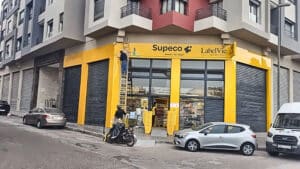
Rwanda’s evolving modern retail sector is reshaping itself on data-driven consumer insights and local know-how.

From movie-style extravaganzas to conversations with digital clones and enhancing visuals, marketers are doing more than just tinker with AI.

Most recent Black Friday period demonstrated how increasing consumer familiarity with online shopping is driving ongoing demand.

The latest issue of Strategic Marketing for Africa, the magazine for deep-thinking African marketing professionals, is now available.

Brand revamp responds to evolving trends, particularly among younger consumers, while acknowledging Schweppes’ 240-year history.

Partnership ensures Liverpool won’t walk alone as it sees a strong retail opportunity among its growing fan base in Africa.

Latest move in Carrefour’s Africa expansion strategy should see it operating 30 stores in the country with a local partner by 2028.

Certain restrictions on TV and online advertising aimed at kids. Health sector sees it as a first step towards a total ban.

The brands that thrive will treat creativity as a core strategy which underpins sustainable growth, social impact and global engagement

The latest issue of Strategic Marketing for Africa, the magazine for deep-thinking African marketing professionals, is now available.
Dr. Kin Kariisa is an extraordinary force at the helm of Next Media Services, a conglomerate encompassing NBS TV, Nile Post, Sanyuka TV, Next Radio, Salam TV, Next Communication, Next Productions, and an array of other influential enterprises. His dynamic role as Chief Executive Officer exemplifies his unwavering commitment to shaping media, business, and community landscapes.
With an esteemed academic journey, Dr. Kariisa’s accolades include an Honorary PhD in exemplary community service from the United Graduate College inTexas, an MBA from United States International University in Nairobi, Kenya, a Master’s degree in Computer Engineering from Huazong University in China, and a Bachelor’s degree in Statistics from Makerere University.
Dr. Kariisa pursued PhD research in Computer Security and Identity Management at Security of Systems Group, Radboud University in Nijmegen, Netherlands. As a dynamic educator, he has shared his expertise as a lecturer of e-Government and Information Security at both Makerere University and Radboud University.
Dr Kin did his PhD research in Computer Security and Identity Management at Security of Systems Group, Radbond University in Nigmegen, Netherlands. He previously served as a lecturer of e-Government and Information Security at Makerere University in Kampala, Uganda and Radbond University in Netherlands.
Dr Kin did his postgraduate courses in Strategic Business Management, Strategic Leadership Communication and Strategies for Leading Successful Change Initiatives at Harvard University, Boston USA.